

Throughout the history of design, certain furnishings have marked both a cultural and a design turning point: “genius” pieces whose innovative and radical character redefined tradition, introducing new ways of living and interacting with space. Think of the first Tripolina chairs, which introduced a new concept of lightness and portability through their folding structure; or the sofa bed, which combined two functions into a single product to respond to the demands of smaller homes; or modern extendable tables, whose concealed mechanisms transformed the dining table into a flexible and reconfigurable element. Groundpiece belongs to this lineage of iconic pieces. Introduced by Flexform at the beginning of the new millennium, it gave rise to an entirely new way of experiencing the sofa.
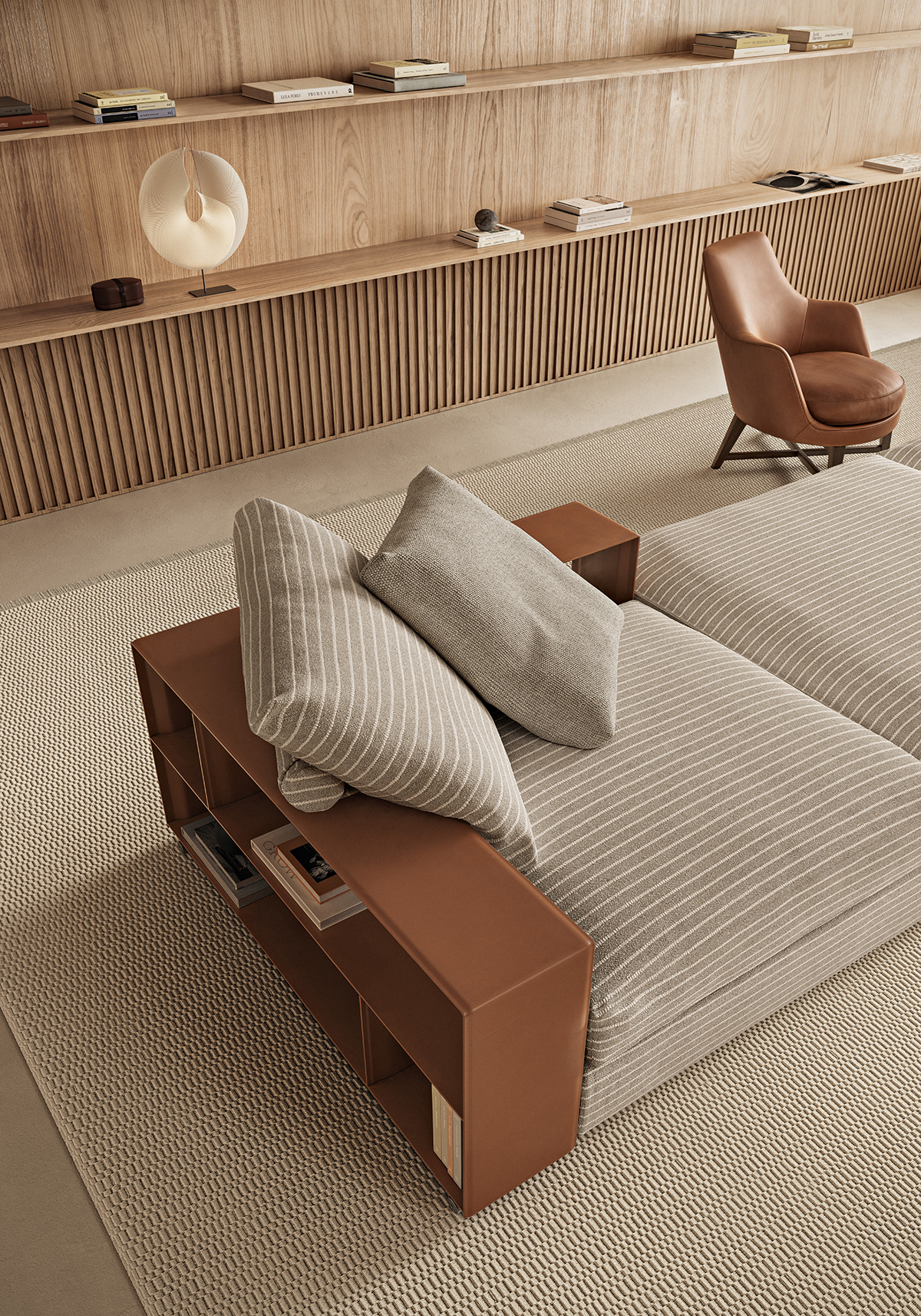
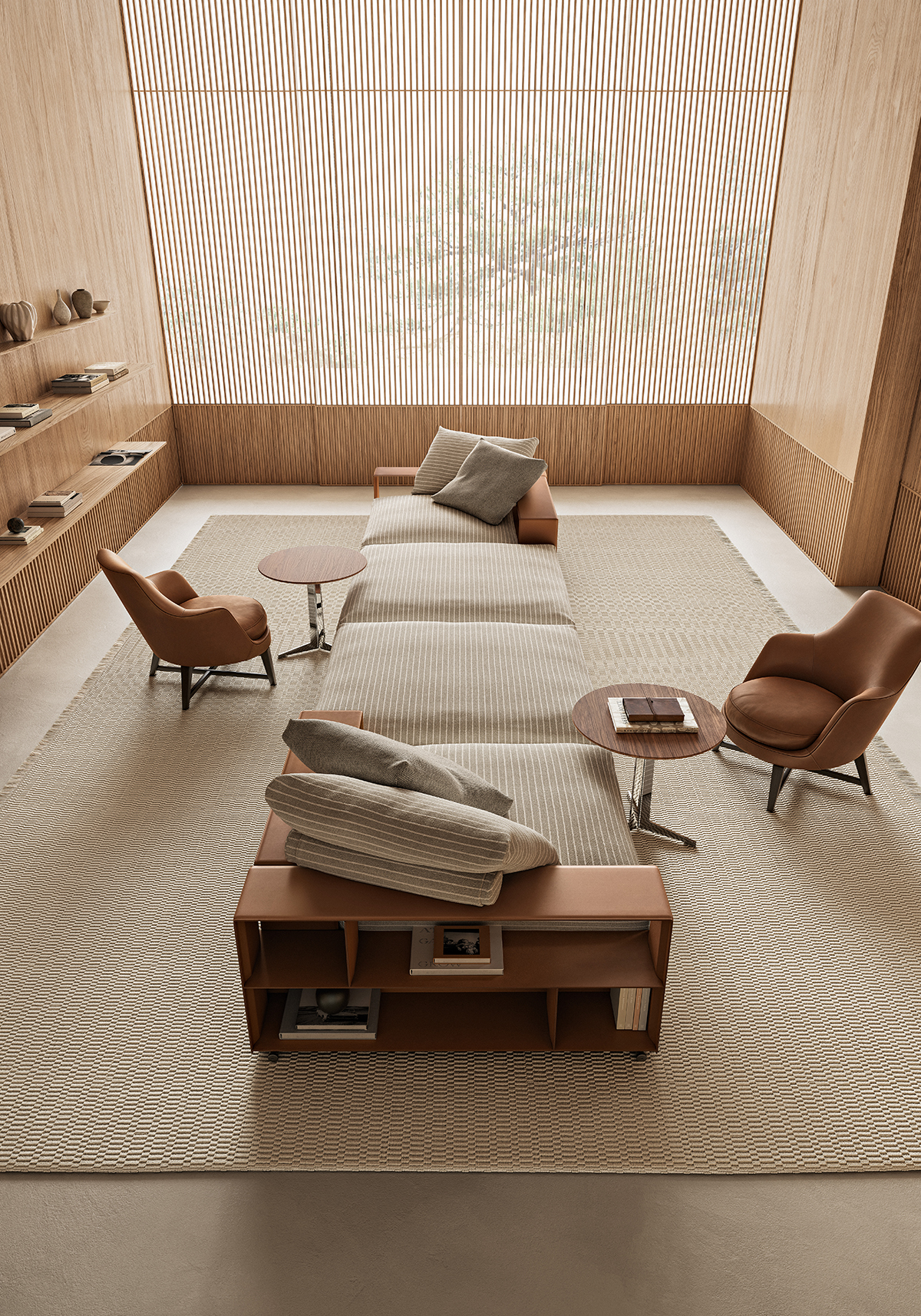
When Antonio Citterio designed it in 2001, design culture was moving in different directions: on one side, a minimalist and balanced approach; on the other, a more pop-inspired and futuristic language. Groundpiece emerged instead with its own independent identity, embracing experimentation not through form, but through use. Its low, deep volumes were conceived to encourage a more informal and relaxed way of sitting. Its deliberately deconstructed design already anticipated the possibility of countless configurations and integrations, foreshadowing the modularity that today has become essential in contemporary living spaces.
Its strong linearity combined with soft goose-down cushions transformed the seating system into a domestic landscape designed for relaxation and comfort. Antonio Citterio drew direct inspiration from the work of Donald Judd. Like the artist’s sculptures, the new Flexform system rests directly on the floor through a low-profile structure and is defined by a clean, linear and modular design. “When we designed it,” recalls architect Antonio Citterio, “it seemed like an idea with great content but little chance of success. Too simple, too direct, not traditional enough.
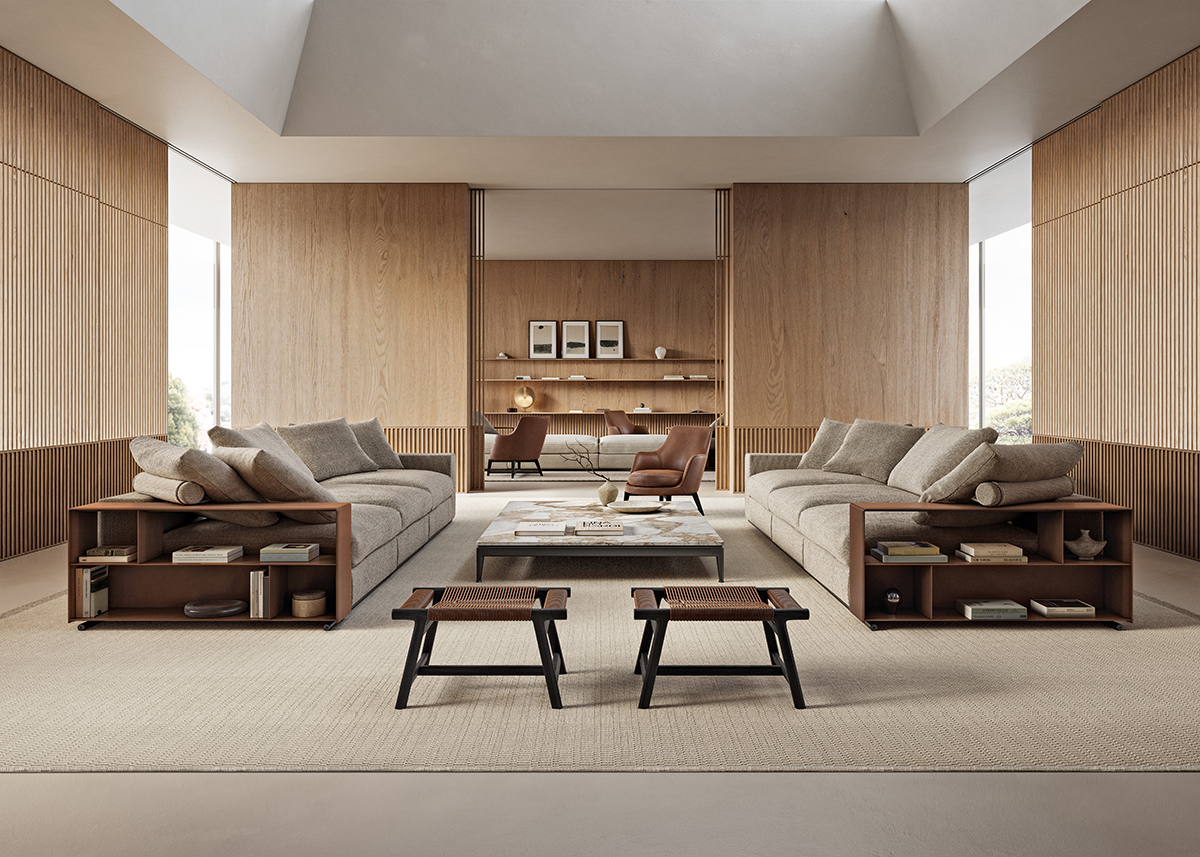
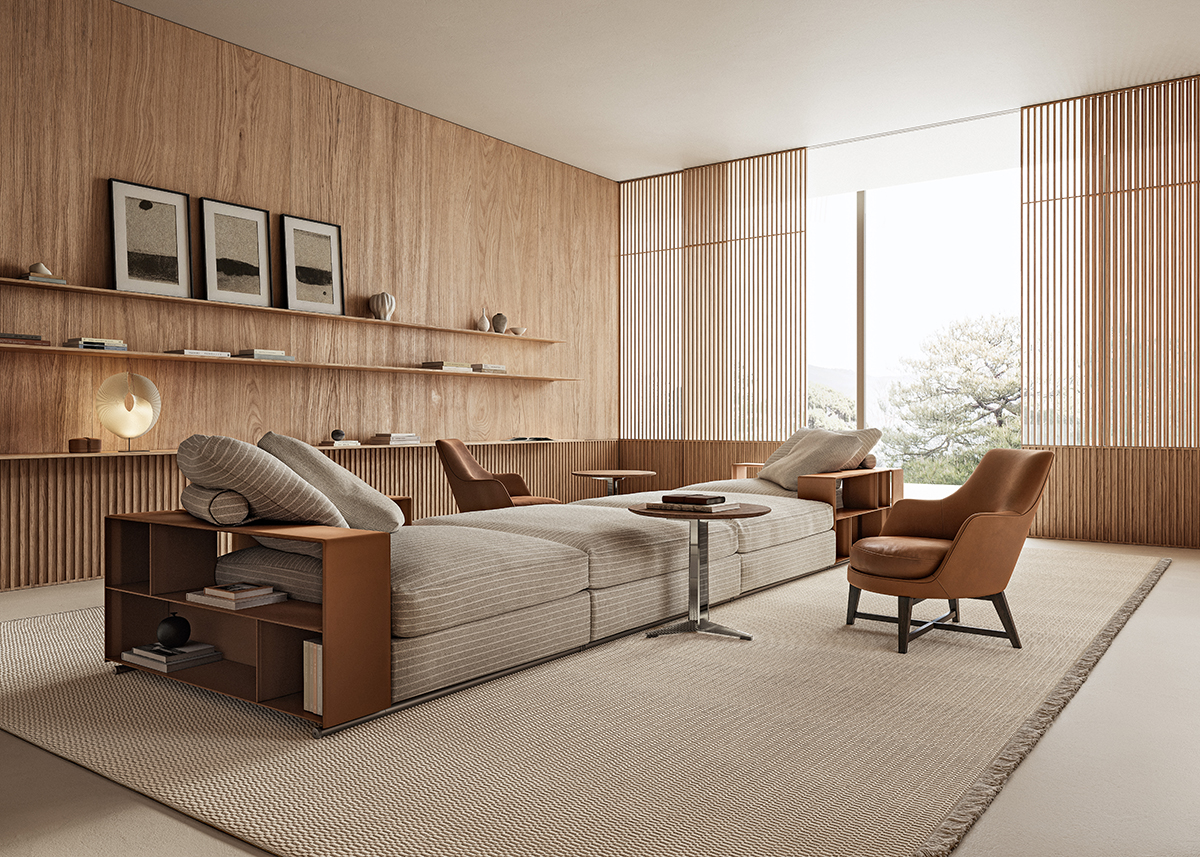
It wasn’t even clear whether it was a sofa or not. Yet we found this encounter between art and a cushion fascinating – something unusual, almost paradoxical. So, we made it. A few months later, it was a success.” Further defining the system was the introduction of saddle-leather armrests as an alternative to upholstered versions. These elements function both as integrated storage units and practical side surfaces, adding another layer of functionality.
Groundpiece thus gave shape to a new way of using the sofa – more versatile, more transversal. A place to eat, work, meet, relax and even dine. A concept that feels perfectly aligned with contemporary lifestyles today, but which was genuinely revolutionary at the time. For this reason, twenty-five years after its launch, the collaboration between Citterio and Flexform remains remarkably current. Groundpiece has evolved alongside changing lifestyles, embracing them through a flexible design and a style characterised by understated elegance. Its aesthetic does not follow trends but rather pursues a classic, refined and reassuring beauty, creating a domestic oasis of wellbeing enhanced by materials such as linen, cotton and cashmere, alongside a soft and harmonious colour palette.
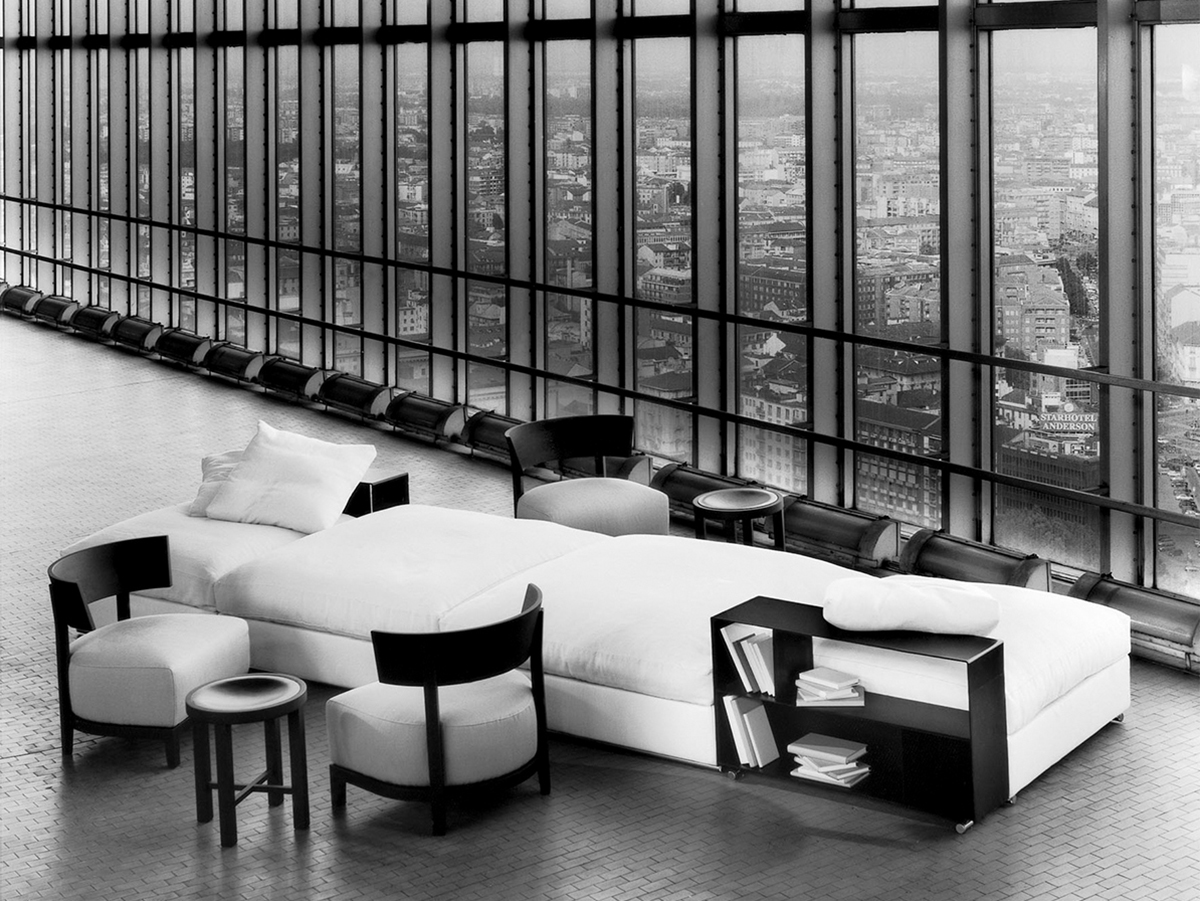
Photo © Gabriele Basilico, 2001
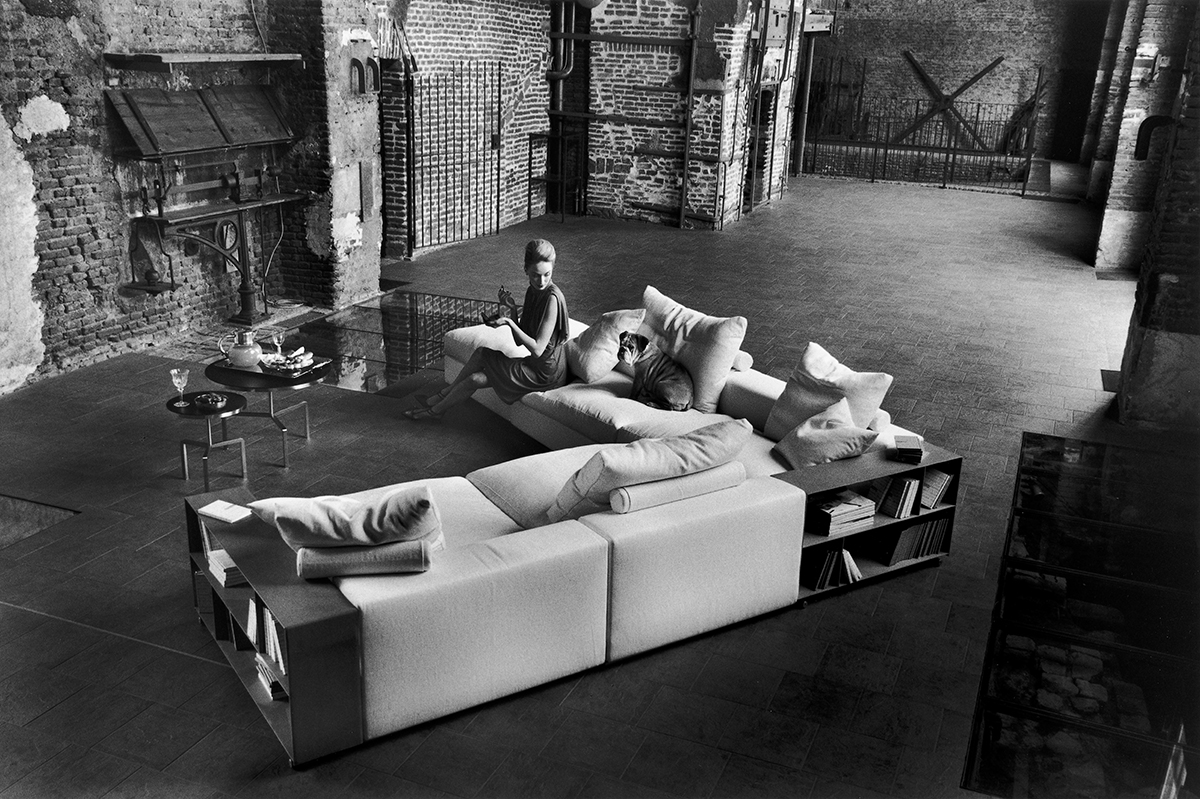
Photo © Gianni Berengo Gardin, 2011
Thanks to the timeless appeal that has made it an icon, Groundpiece has been captured through the lenses of some of the world’s most celebrated photographers. Gabriele Basilico gave it architectural depth; Gianni Berengo Gardin portrayed it in its everyday naturalness; Maria Vittoria Backhaus revealed its tactile soul; Pierpaolo Ferrari interpreted it with subtle irony without compromising its status as a living classic; and Robert Rieger placed it at the centre of refined and timeless interiors. Different perspectives, a single product. Today more than ever, Groundpiece stands as a manifesto of sophisticated living, a demonstration that truly great design evolves with grace and remains relevant across generations.


