

Color, form, light. A triptych that defines the identity of Martinelli Luce. Essential lines, nature and geometry as sources of inspiration, experimentation and innovation in technology: these values delineate its distinctive design language. The brand’s lamps do not merely illuminate; they create spatial narratives, shaping environments and atmospheres. They are often characterized by a playful, pop spirit, a direct legacy of founder Elio Martinelli.
Cobra, Pipistrello, Serpente, Ruspa, Elmetto, Visiere are some of Martinelli Luce’s icons that freely interpret the relationship between form and function: inspirations drawn from the natural world transformed into design objects, or combinations of pure forms that push creativity towards new meanings, where aesthetics merge with vibrant colors that instill optimism.
Pallino perfectly encapsulates the 70s mood in which it was born: an era when design expressed itself through saturated colors, innovative materials, and geometries that challenged past rigor; when Italian names emerged that would dictate formal rules and write the history of Italian and international industrial design. Amidst that ferment, Pallino stood out for its formal simplicity.
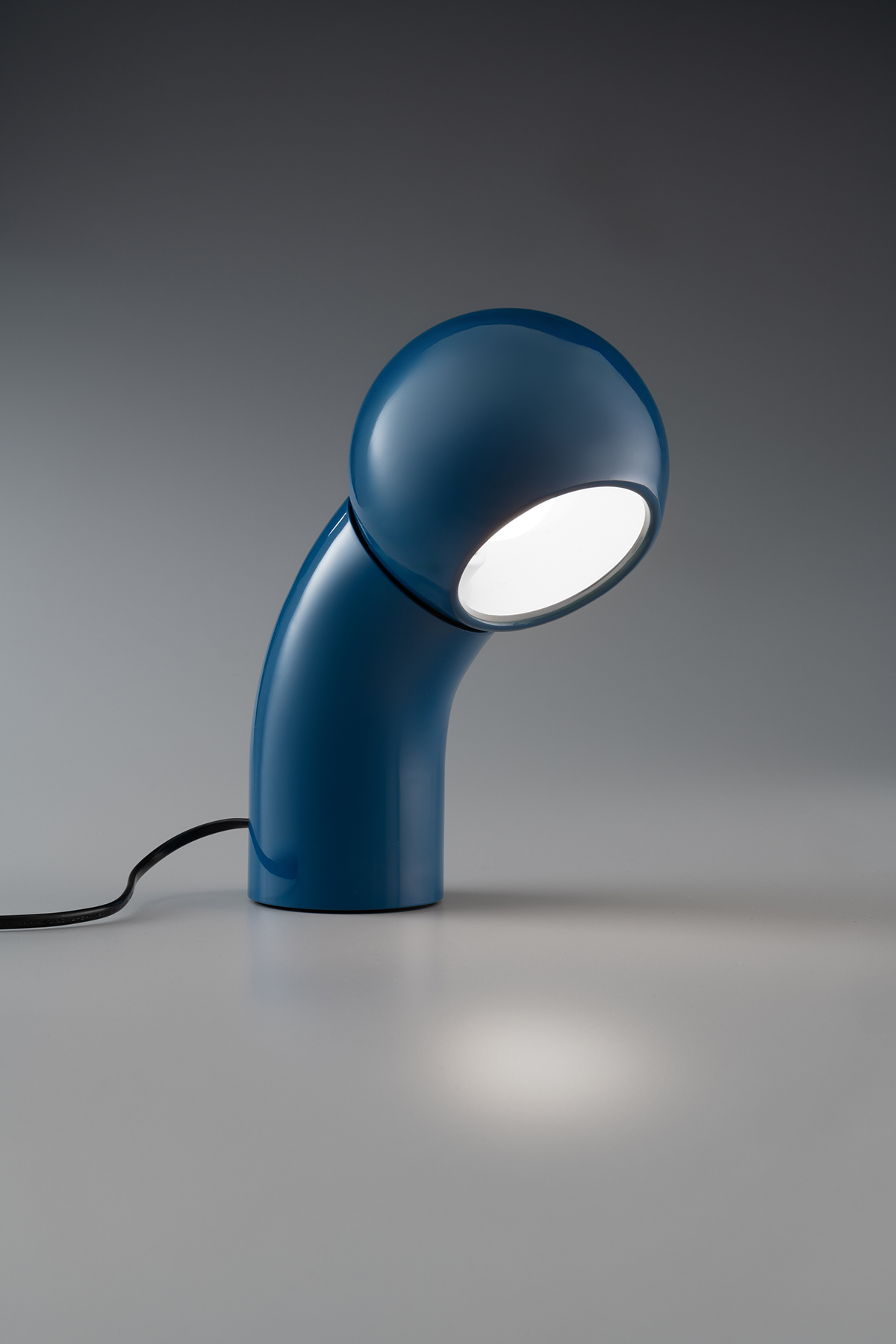
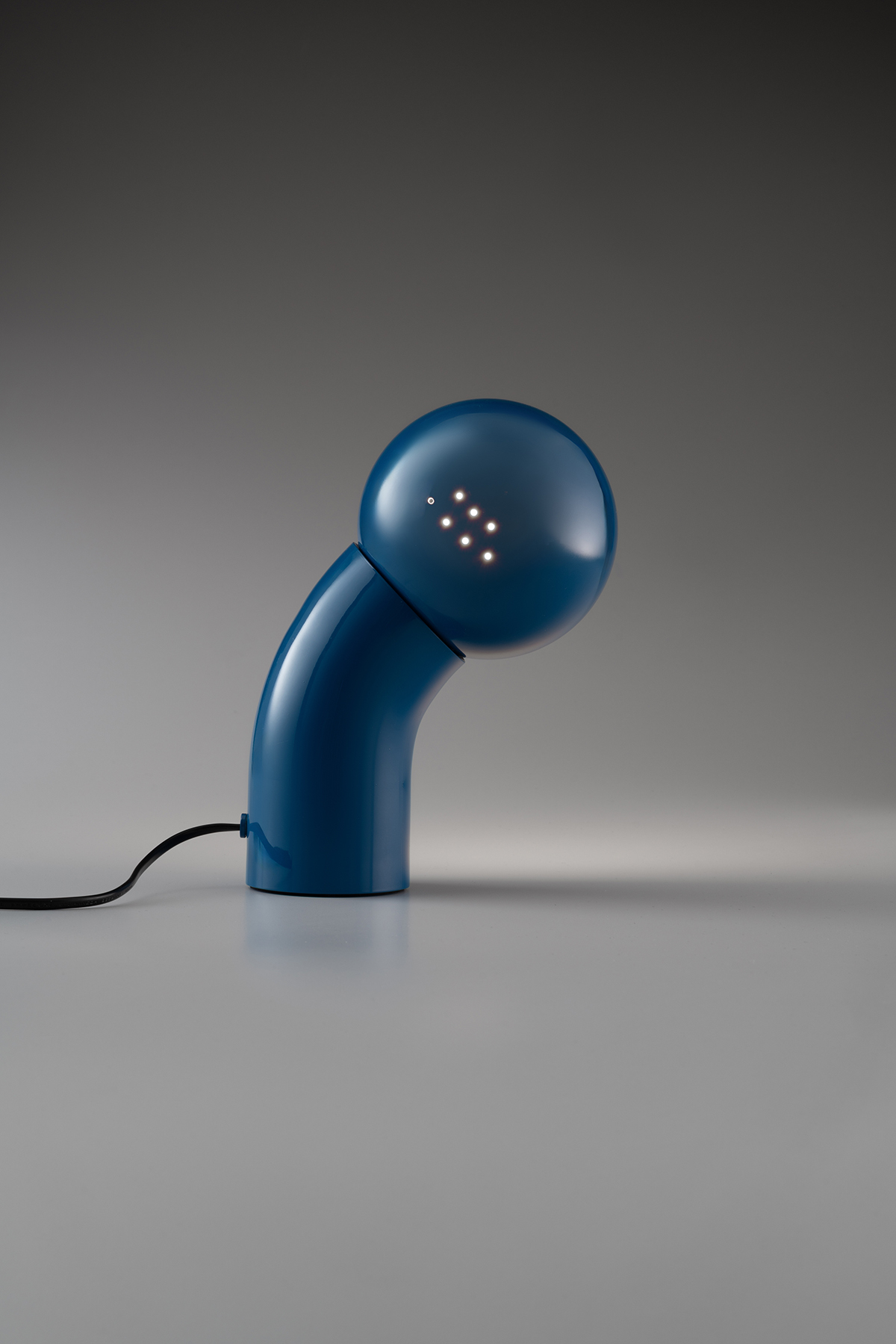

Returning to the scene, it re-proposes the spirit of that period. Pallino is composed of two simple and compact volumes, in a play of perfect contrasts: a slender, curved base, upon which rests a spherical reflector, a small adjustable globe that directs light like a curious and captivating gaze, scanning the space with curiosity from a desk surface or bedside. The lamp’s very name, an affectionate diminutive, embodies this spirited attitude. Pallino invites discovery, evokes the pleasure of reflection, and accompanies moments of relaxation thanks to its warm and enveloping light emerging from the reflector, available in a wide palette of colors – orange, white, blue, yellow, and red.
“Re-introducing Pallino means bringing a touch of that formal lightness and chromatic audacity that made Italian design great back into today’s homes,” says Emiliana Martinelli, President of Martinelli Luce. “It’s choosing an object with a story to tell, one that still wants to look forward alongside its owner.”


