

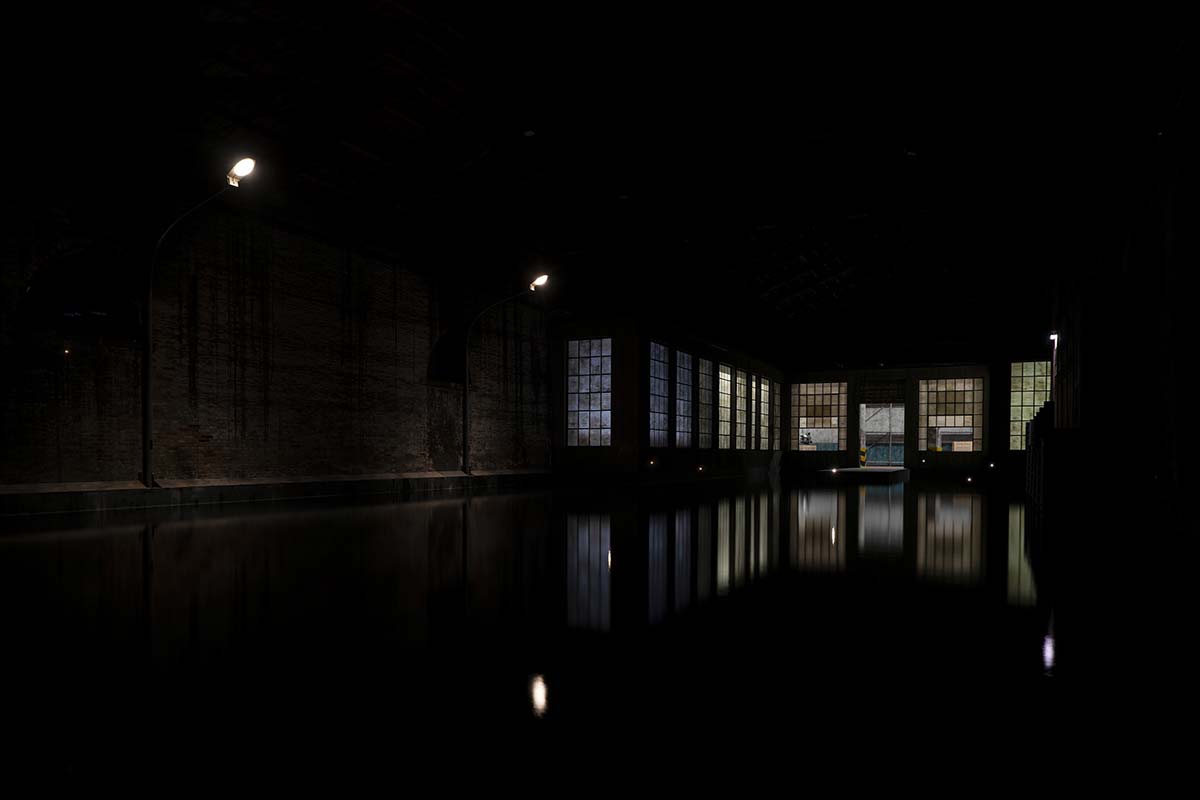
History of Night and Destiny of Comets is conceived as a vast environmental site-specific installation that occupies the whole space of the Tese delle Vergini. It proposes a vision of the current state of humanity and its future prospects. The work is conceived as an intermediary device that contains and mixes a variety of languages, as usual in Gian Maria Tosatti‘s research, which integrates literary references and visual art, with stimuli from theatre, music, and performance. A complex, experiential narrative machine that leads the visitor along a sensitive, sometimes familiar and sometimes unsettling path, with the aim of creating a new awareness and concrete reflections on the possible destiny of human civilisation, which fluctuates between the dreams and errors of the past and the promises of a future that has yet to be written in part.
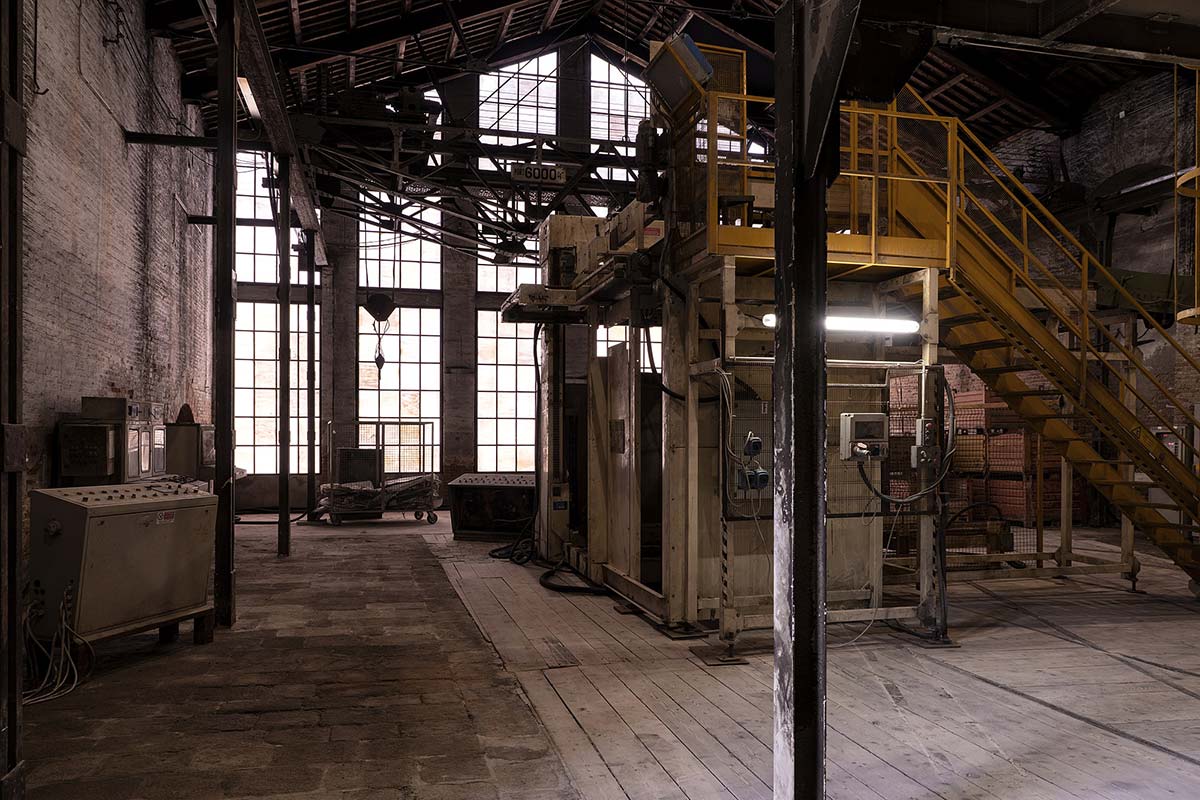
History of Night and Destiny of Comets tells of the difficult balance between man and nature, between sustainable development and territory, between ethics and profit, proposing an aesthetic reading of this scenario and offering an unprecedented platform to develop a comprehensive and profound debate on these issues. The exhibition is envisioned according to a theatrical ratio that articulates the narrative into a prologue and two acts: History of Night and Destiny of Comets.
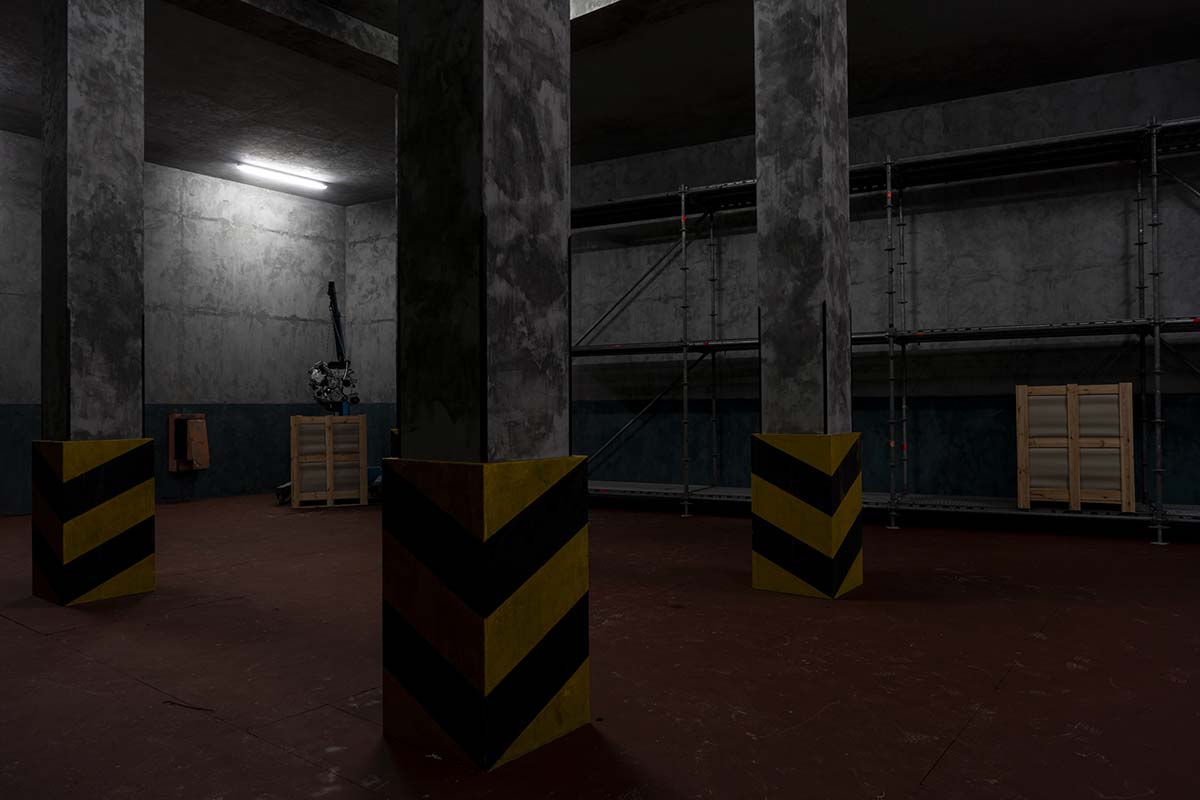
The space of the first room is a journey into the ‘Bel Paese’ and coincides with the Story of Night or rather the symbolic story of the rise and fall of the Italian industrial dream. A sequence of disturbing scenarios prepares for a final vision in which the imagination is overturned in a true epiphany. A series of different scenario recall La Dismissione (The Dismissal) by Ermanno Rea (Feltrinelli, 2002) and the expanse of warehouses that stretch across the landscape between Ragusa and Cremona, the only paradoxically homogeneous panorama of a hypothetical provincial Italian journey. The Destiny of Comets is the final vision, which reminds us that indignant nature has not forgiven man since the time of the Flood. Through this image emerges a powerful and unsettling epilogue, an inverted disturbing element, the sign of a possible peace, the re-appearance of fireflies.
Promoted by the Directorate-General for Contemporary Creativity – Ministry of Culture
Commissioner of the Italian Pavilion: Onofrio Cutaia
Curator: Eugenio Viola
Photos: Gian Maria Tosatti, “History of Night and Destiny of Comets” (Storia della Notte e Destino delle Comete), Italian Pavilion at Biennale Arte 2022, curated by Eugenio Viola, Commissioner of the Italian Pavilion Onofrio Cutaia. Courtesy DGCC – MiC


