.Wonder Book by IFDM is a publication – available in print and digital formats – that is published four times a year, showcasing interior design and architecture projects from around the world. In this new issue, we feature spaces and buildings from around the world across 192 pages that explore the evolution of creative thought and taste through images, texts, and interviews.
Design begins with the product
by Paolo Bleve – Publisher & Editorial Director
The Design Directory 2026 celebrates the product not as the final outcome of a design process, but as the genesis of creative thinking. The interviews in this issue reflect this philosophy, offering the perspectives of three distinguished professionals. Different in background, expertise, and geography, they share how projects can evolve from the space itself, while always keeping in mind the objects destined to inhabit it. The product therefore takes center stage throughout these eighty pages of inspiration, where research, innovation, and aesthetic sensibility converge to inspire new creative visions.

Paolo Bleve – Publisher & Editorial Director
This is confirmed by Guillaume Roland, a long-time collaborator of design icon Christian Liaigre, who offers insight into the fascinating dialogue between product and project, revealing how each continuously informs the other. Nevius Glussi, a leading expert in hospitality finance and development across Europe and Asia, extends his conversation far beyond strategy, revealing a profound sensitivity for the relationship between concept and geography. For Glussi, development never begins with a sterile spreadsheet, but with a powerful mental image that expresses both the space and its content from the outset. As co-CEO of HBA, Chris Godfrey has expanded the firm’s creative horizons by establishing HBA Residential.
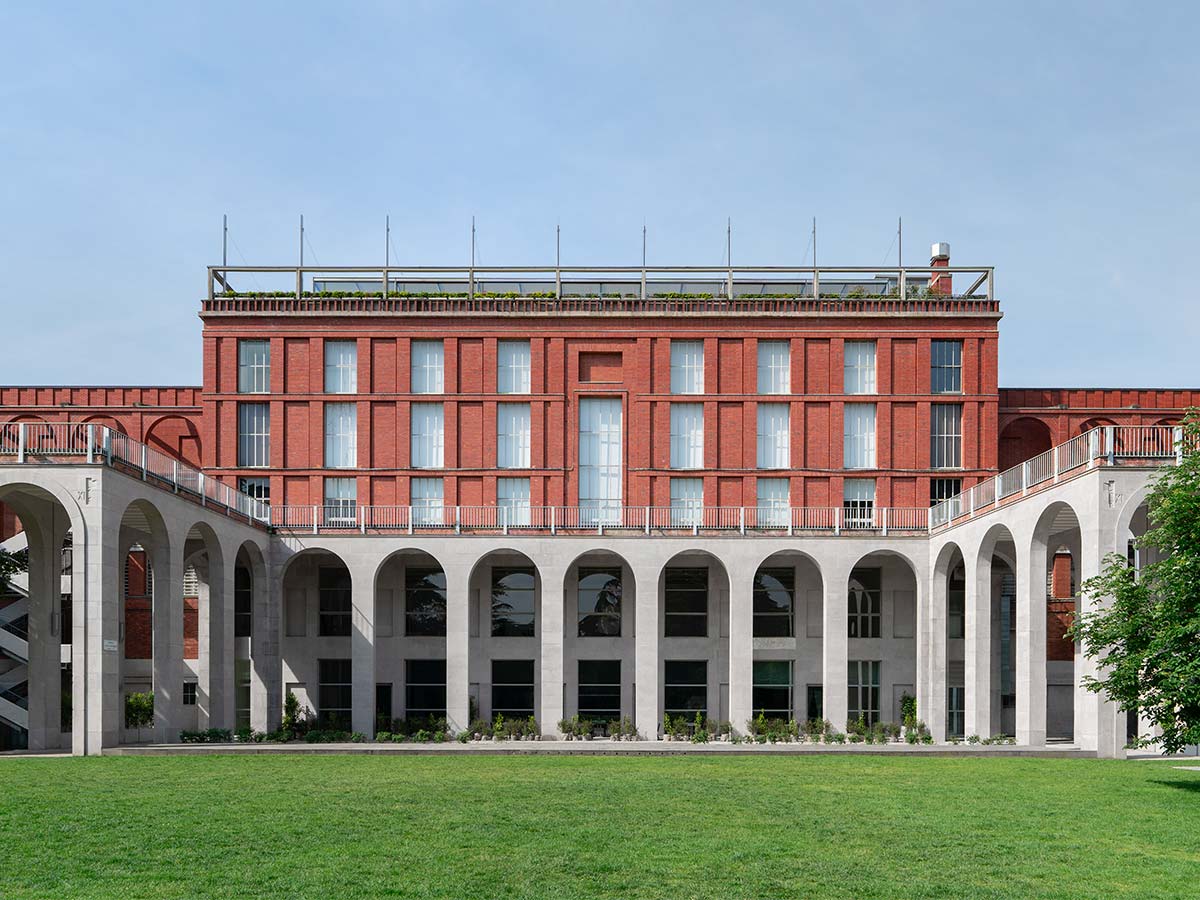
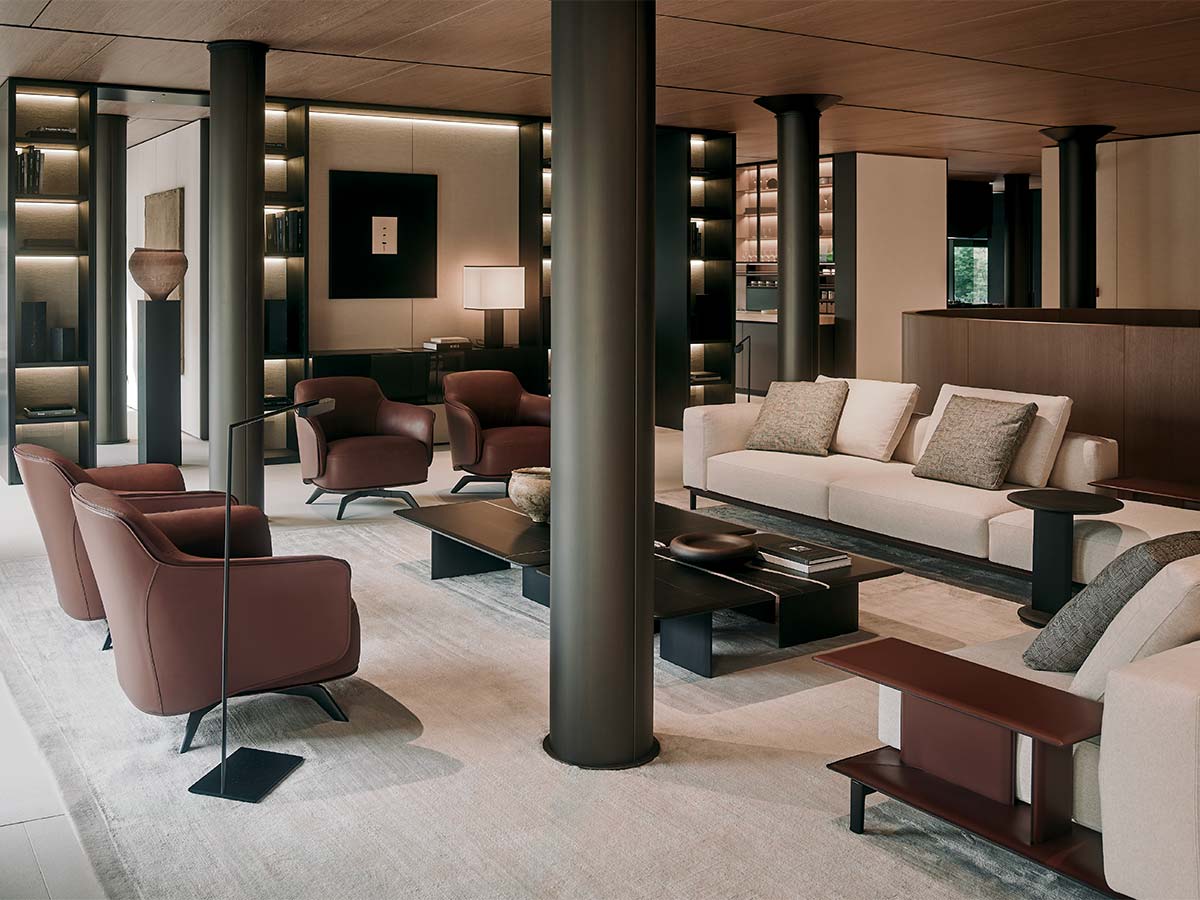
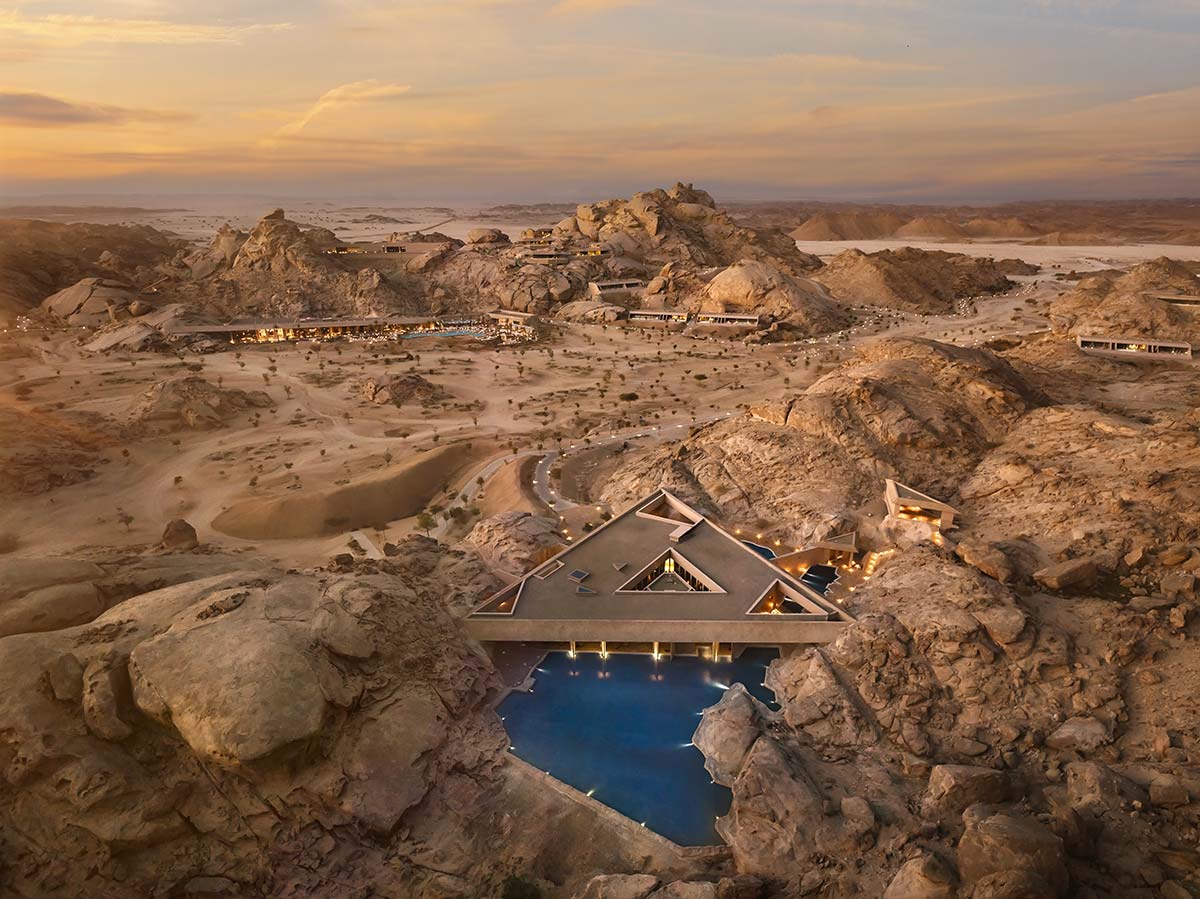
This fosters a multidisciplinary approach embracing lighting, furnishings, and landscape design, resulting in a continuous exchange between residential and hospitality – two worlds that increasingly inspire one another. The projects featured in this edition span a wide range of typologies. Nature emerges as a protagonist in two properties conceived to blend seamlessly into their surroundings: Tafelberg in the Netherlands by Studio Massimo, and Yabu Pushelberg’s vision for Raffles Sentosa Singapore. Two boutique hotels offer distinct approaches to hospitality. imperialart in Merano is an exercise in stylistic layering, where diverse influences create a unique guest experience with art as a constant companion. In Rome, Hotel Trame occupies the historic Palazzo Roberti-Conti-Datti. Preserving the building’s original character while introducing bold spatial interventions, the project challenges conventions of materiality and form, delivering a new expression of serendipity that only Rome can offer.
This issue also explores two remarkable adaptive reuse projects: the Benedictine monastery transformed into Castel Badia by Droulers Architecture, and the former convent in Nice reimagined as Hotel du Couvent by Festen Architecture. Having experienced the latter, I was struck by its rare ability to slow time, inviting guests to rediscover the life that thoughtful design can restore. Enjoy the read.
Experiencing space
by Alessandra Bergamini – Deputy Editor of .Wonder Book
La Sagrada Familia – whose Tower of Jesus Christ, the tallest in the complex, was inaugurated just this June by Pope Leo XIV on the centenary of Antoni Gaudí’s death – became the Catalan architect’s residence between 1925 and 1926, the final years of his life. It was an early and decidedly extreme example of an ‘architect-in-residence,’ where the architect lives within the very place he is designing and building, consumed by the obsession for his grand architectural and religious vision. Short of the asceticism of Gaudí’s final years, living within the site of a project – for instance, one of restoration and transformation – undoubtedly fosters a deeper connection, reveals unique perspectives, and grants a greater understanding of a place’s context, history, construction techniques, and relationship to the landscape.
Alessandra Bergamini – Deputy Editor of .Wonder Book
This is precisely the experience architect Louis-Antoine Grégo of Studio Méditerranée recounts about his time as an ‘architect-in-residence’ during the research and transformation phase of the Couvent de la Visitation in Nice, now the Hotel du Couvent: “To fully understand the space, I decided to live in the abandoned convent during the research phase. This wasn’t just about being present – it was about experiencing the land and the building intimately, feeling its rhythms, and learning from it. I gathered a team of students who also became immersed in the space, some even moving in to study the site more deeply. Together, we explored the convent’s history, architecture, and unique atmosphere, in the most direct way possible.”
These are places and spaces, ancient and modern architectural works, that are (re)designed to be lived in and livable, to preserve their historical and cultural heritage by blending past with present. Examples here include the aforementioned Hotel du Couvent, the Castel Badia fortress, Hotel Trame in Rome’s historic Palazzo Roberti-Conti-Datti, and the Orient Express Venezia at Palazzo Donà Giovanelli, whose visionary interiors are featured in the ‘Wonder’ photo spreads of this issue.
Other spaces selected for this Wonder Book Summer are conceived from scratch as “livable works of art.” The 12 rooms of the imperialart hotel in Merano allow guests to live inside a work of art, each one entirely commissioned from a different artist, where artistic inspiration and expression have the power to define space, evoke emotion, and provoke interpretation.
Beyond this particular example, the role of art is becoming increasingly prominent in the hospitality sector, a trend confirmed by Chris Godfrey, Co-CEO of HBA, in his interview: “We’ve moved from a superficial and purely decorative use to an approach where art can become the central element, the ‘raison d’être’ of a project.”