In Madrid, design is truly everywhere. While the Spanish capital isn’t historically the country’s most significant production hub – Valencia and Barcelona hold that title more firmly – it has nonetheless become one of the most vibrant centers, not just nationally but across the continent. The reason lies in a paradigm shift within the discipline itself: born less than two centuries ago amidst the industrial revolution, design has evolved into a practice that transcends borders, connects arts with sciences, and mediates between diverse fields of knowledge.
Madrid is, first and foremost, a major academic center and a key reference point for the communication world. It has fostered a thriving independent scene of art-designers who exhibit in autonomous spaces and art galleries, collaborating with each other and with an international network, cross-pollinating ideas. And for nine years, it has hosted the Madrid Design Festival: an event that, year after year, continues to forge connections, grow, and make a significant effort to showcase the diverse possible faces of design to a general audience, from the most experimental to the most everyday.
Invited by the festival, we traversed the city from north to south: from the luxurious glass towers of the financial district all the way to Carabanchel, a working-class neighborhood where young creatives – pushed out of the center by gentrification – are relocating to live and open studios and workshops. We discovered a widespread, expertly coordinated creativity.
Here are some highlights from the most interesting exhibitions and installations.
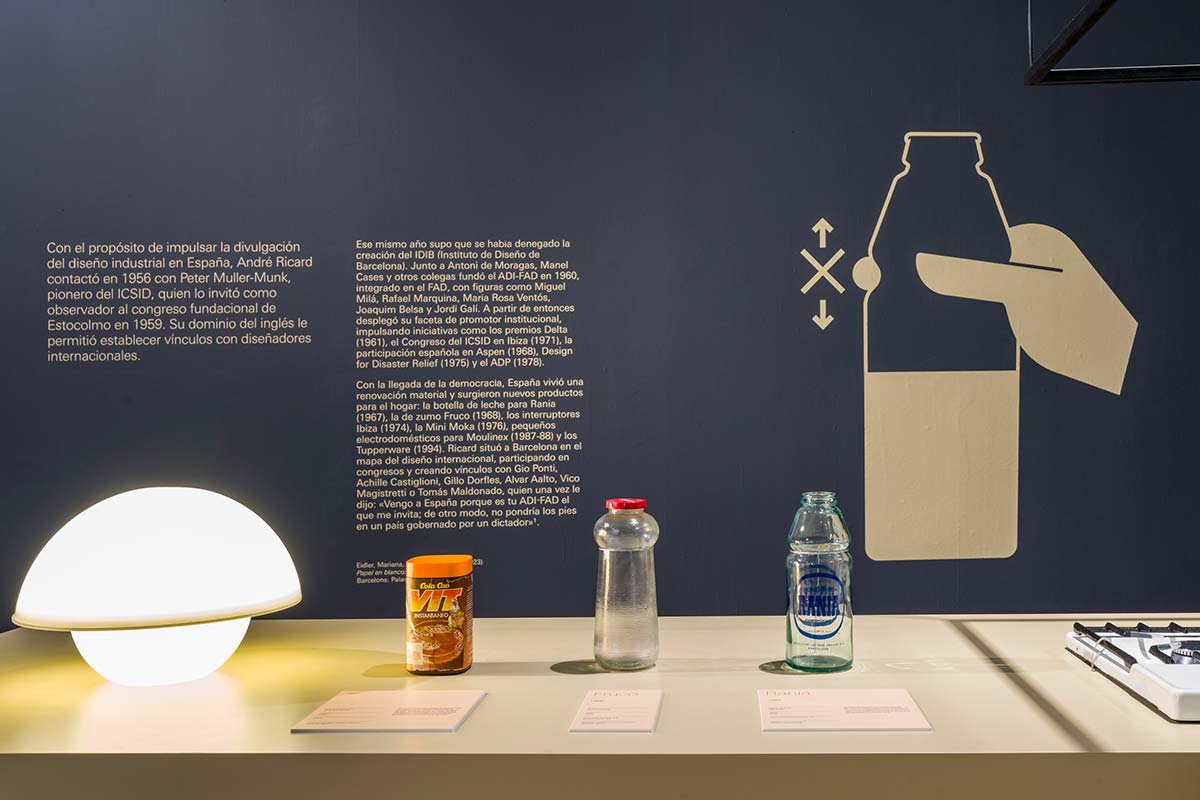
“André Ricard. Design in Use,” exhibition view at Fernán Gómez. Centro Cultural de la Villa. Madrid Design Festival 2026
The Master of Design, André Ricard
“André Ricard. Design in Use” is the largest retrospective ever dedicated to André Ricard, 96, a pivotal figure in design history and a pioneer in building a design culture in Spain. His objects are associated with the ordinary and the unseen: designed for specific uses, conceived to solve real needs, and built to last. To underscore this everyday nature, the exhibition is structured into domestic rooms – bathroom, kitchen, living room, office – where visitors rediscover objects that have silently accompanied their own lives.
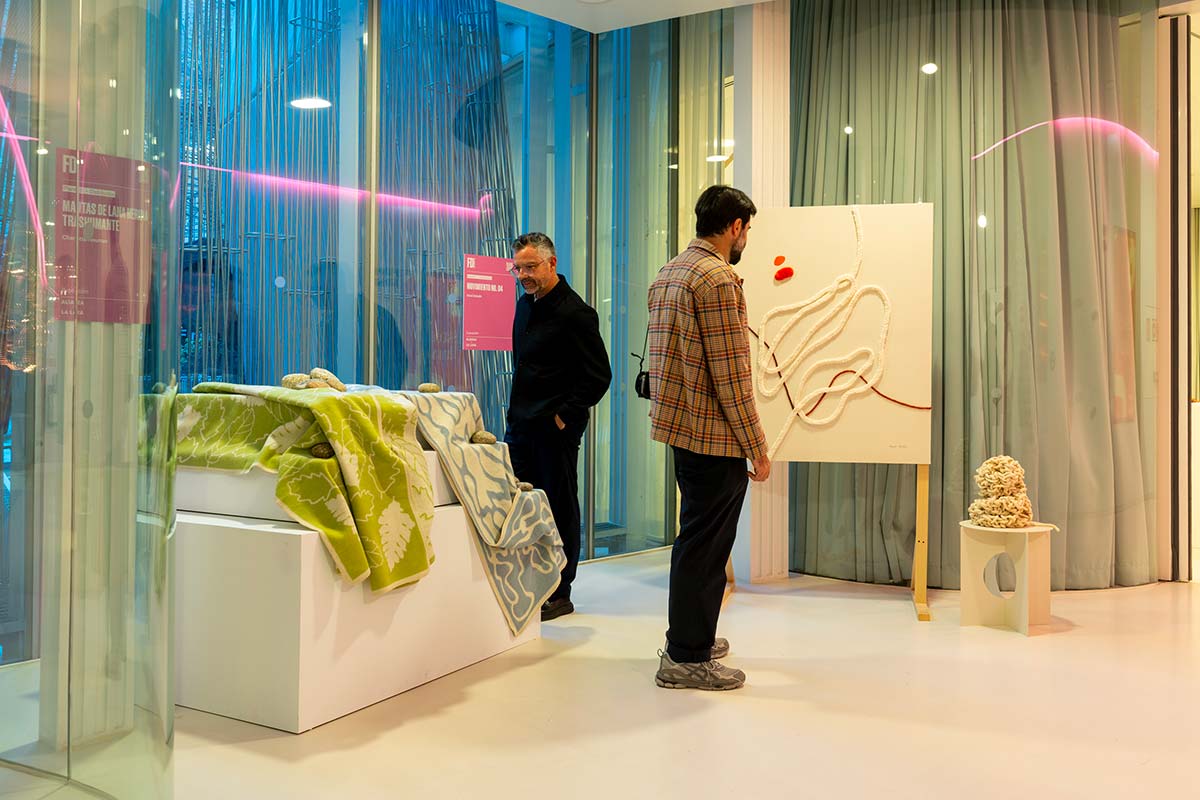
Caption: Paisanaje, Siesta de la pastora, part of the Alianza por la Lana project. Madrid Design Festival 2026
The Alianza por la Lana Platform
“Alianza por la Lana” (Alliance for Wool) isn’t merely a curatorial project, but a platform bringing together over 450 professionals, companies, and institutions with a concrete goal: to reclaim Spanish wool as an economic resource, not just a nostalgic heritage. For centuries considered “white gold,” today 90% of Spanish wool finds no commercial outlets, and its global consumption has dropped to 1% among textile fibers. The result is a collapse of sheep farming and the progressive abandonment of rural areas. The festival responds with installations, research, and projects that explore wool as a living cultural resource, an ecological agent, and an engine of social transformation.
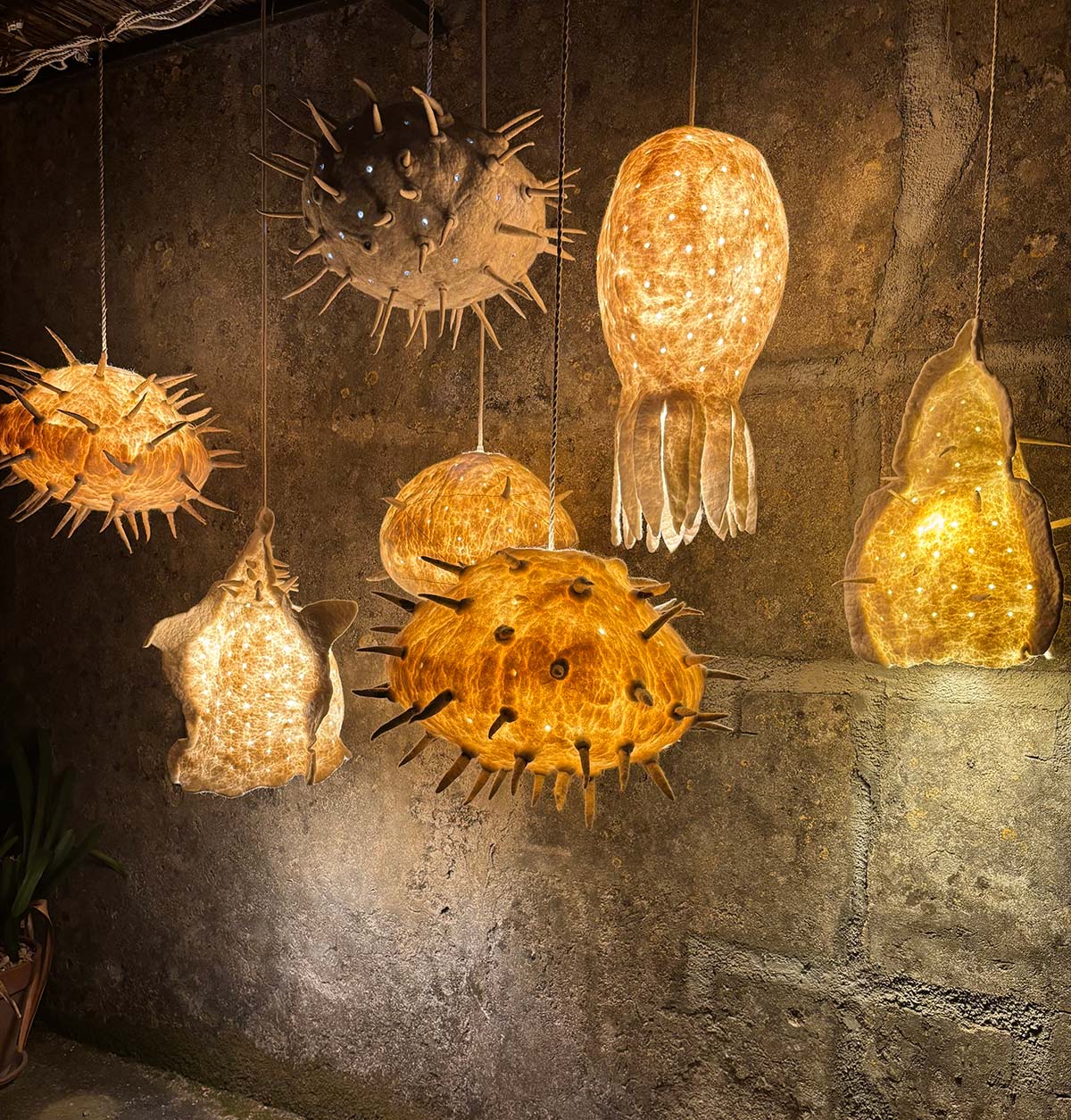
View of the “enLANA2” exhibition at Kutrix Gallery. Madrid Design Festival 2026
Three Collective Exhibitions at the Madrid Design Festival
At Kutrix Gallery, we found the collective exhibition “enLANA2,” also under the umbrella of Alianza por la Lana. Curated by journalist Teresa Herrero, it advocates for the use of wool and a return to primitive materials, interweaving memory and origin with updated and revalued traditional applications. But it’s much more: a cross-cutting narrative of Spanish design, featuring both established and new faces: from Andrea Santamarina to Miguel Leiro, from the ESTO collective to Patricia Urquiola, from Álvaro Catalán de Ocón to Inés Sistiaga. The format is also interesting: Kutrix Gallery temporarily occupies a building materials warehouse, a context as incongruous as it is stimulating. A similar spirit animates “Peso y Presencia” (Weight and Presence) and “Mediterranean Manifesto,” two other collective exhibitions that reveal the threads of collaboration between diverse creators and showcase a shared attitude towards experimentation – not just material, but also conceptual. What emerges, looking at these three exhibitions together, is a Spanish and Mediterranean design that isn’t content with merely producing objects but seeks to question the very meaning of the discipline.
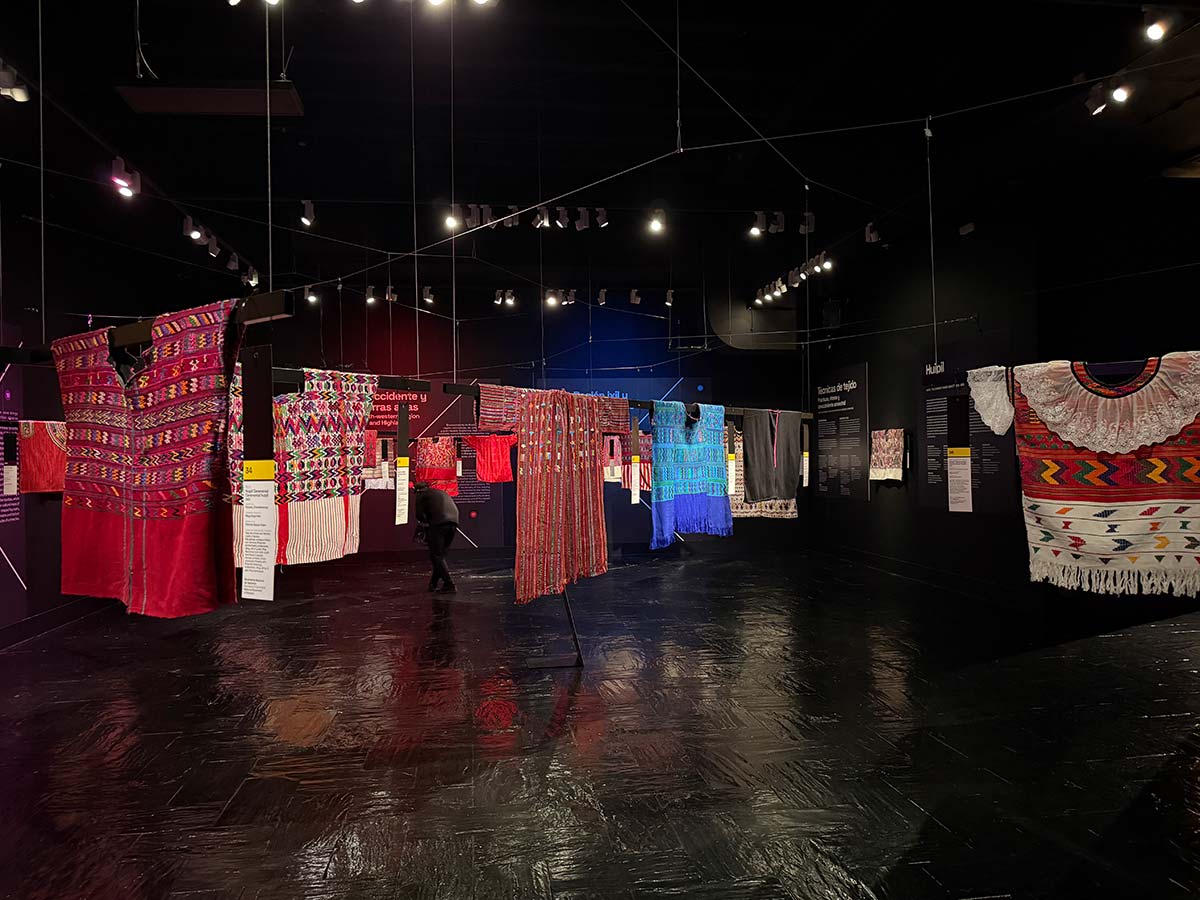
“Textile Art and Guatemala: Design and Identity,” exhibition view at Fernán Gómez. Centro Cultural de la Villa. Madrid Design Festival 2026
The Textile Identity of Guatemala
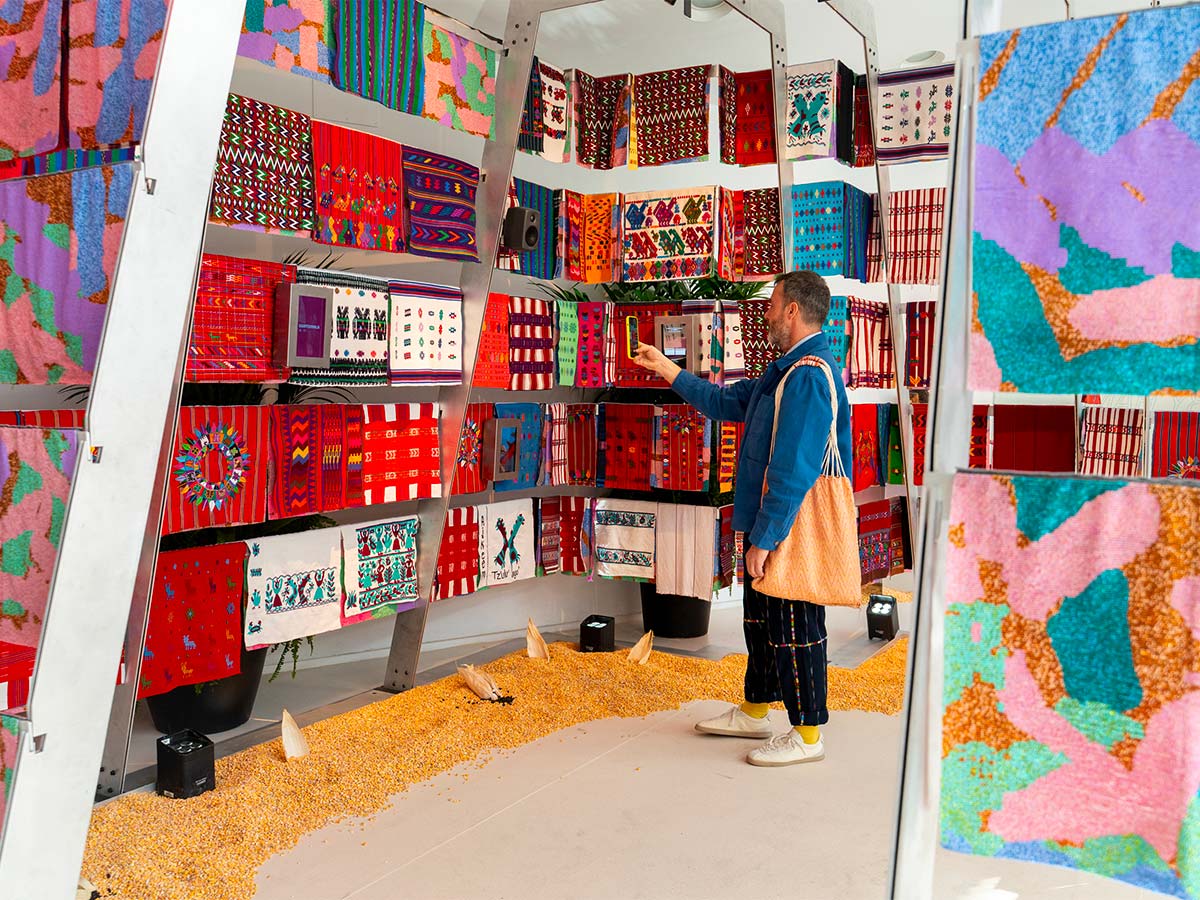
“Textile Art and Guatemala: Design and Identity” is an exhibition capable of telling the story of a territory through design and craftsmanship. As the guest country of the Madrid Design Festival 2026, Guatemala presents its textile heritage, characterized by a great variety of colors, compositions, and techniques: patterns, geometries, and natural dyes dialogue with contemporary trends without losing the essence and cultural roots of the country. The exhibition is complemented by a soundscape weaving together voices, languages, and sounds from the various Guatemalan textile communities, extending the exhibition beyond the visual and restoring the collective and living dimension of this art.
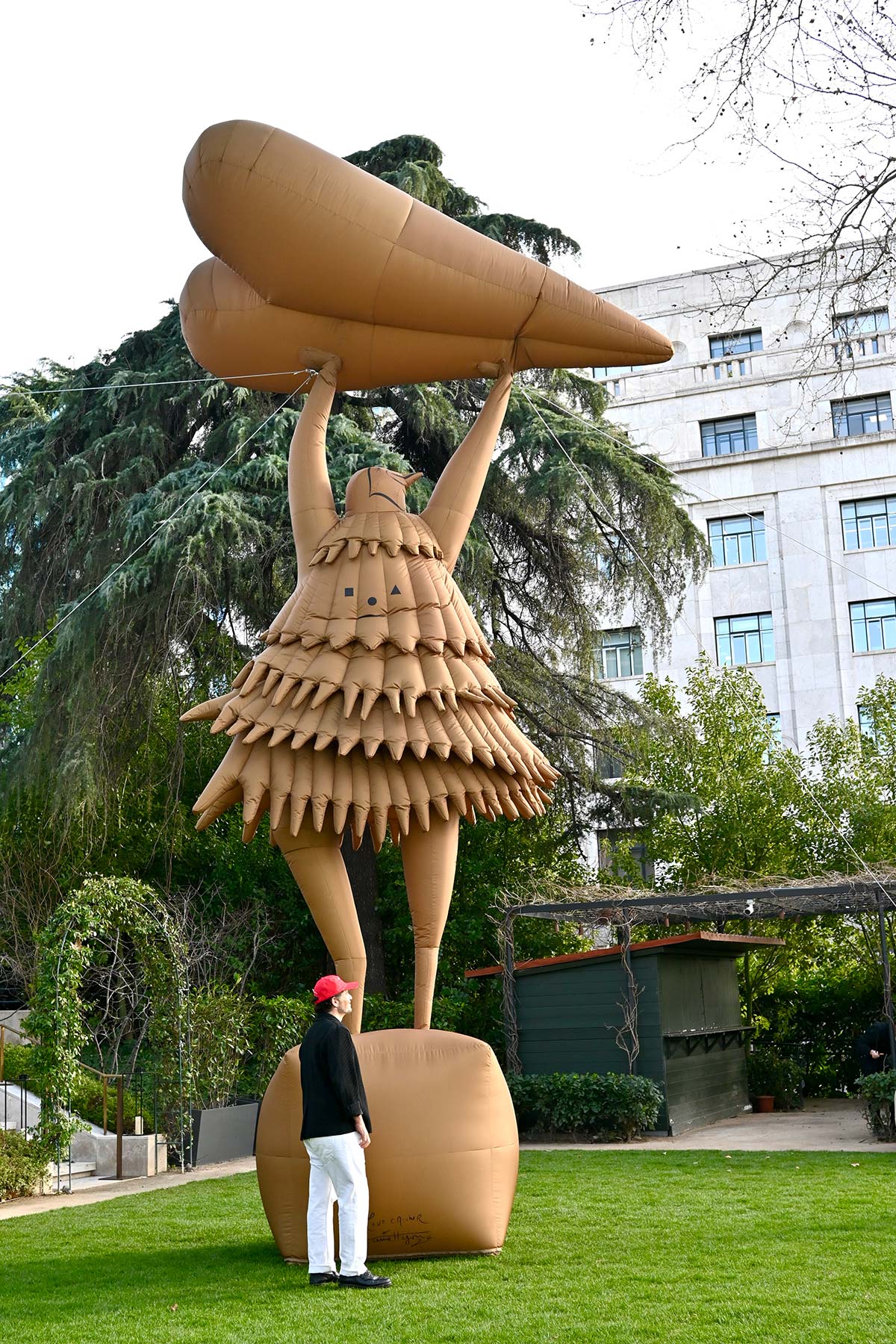
Jaime Hayon, Love Catcher. Madrid Design Festival 2026
Jaime Hayon’s Soft Monument
Jaime Hayon is one of the most renowned faces of Spanish design and a recurring protagonist of the Madrid Design Festival. This year, he presented Love Catcher, a sculptural installation conceived as an act of visual resistance in a world shaped by noise and conflict. The project is part of Soft Bronze, a series of works in which the artist explores the material and conceptual contrast between softness and monumentality, the permanent and the ephemeral. A hybrid figure – a humanized bird, a recurring symbol of freedom in Hayon’s imagination – appears heavy and solid, yet suspended in the air, and it is precisely in this contradiction that its symbolic character lies.