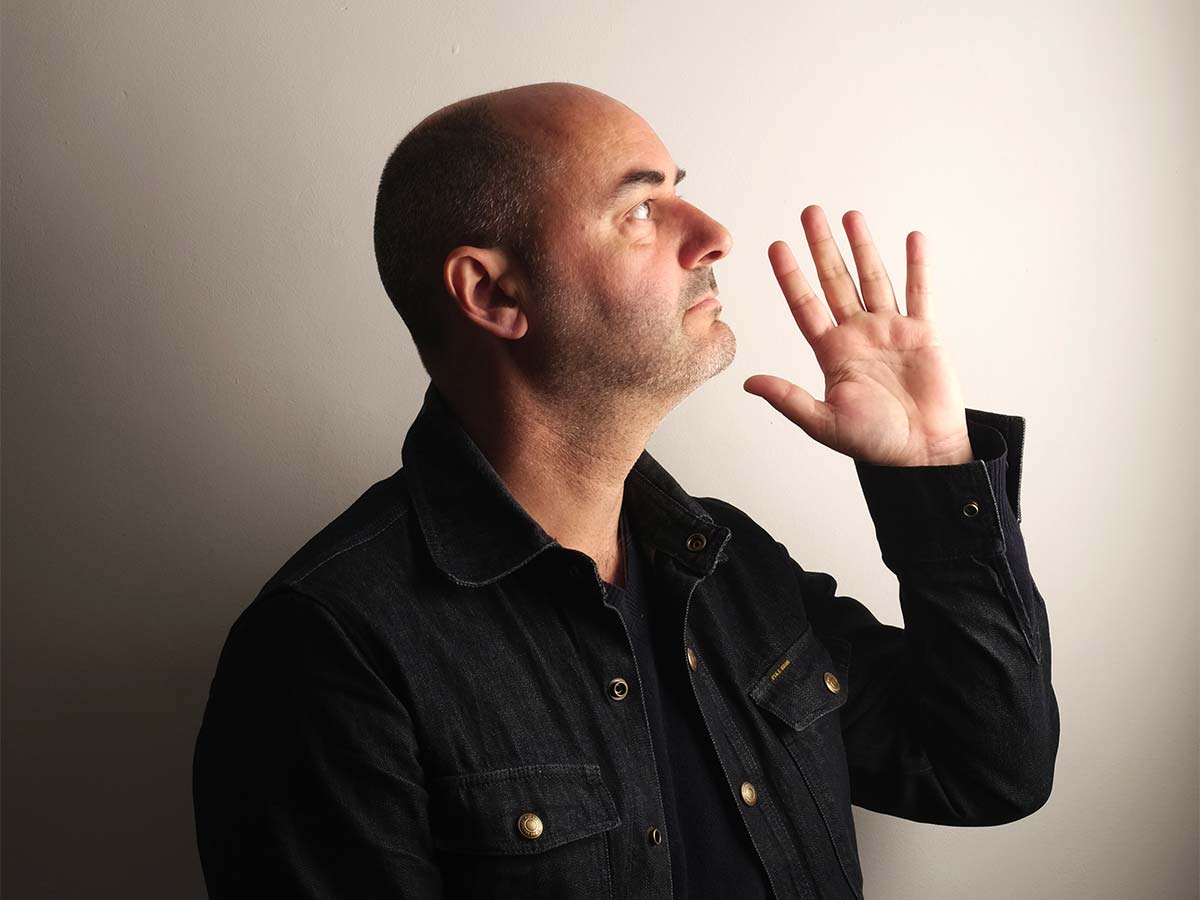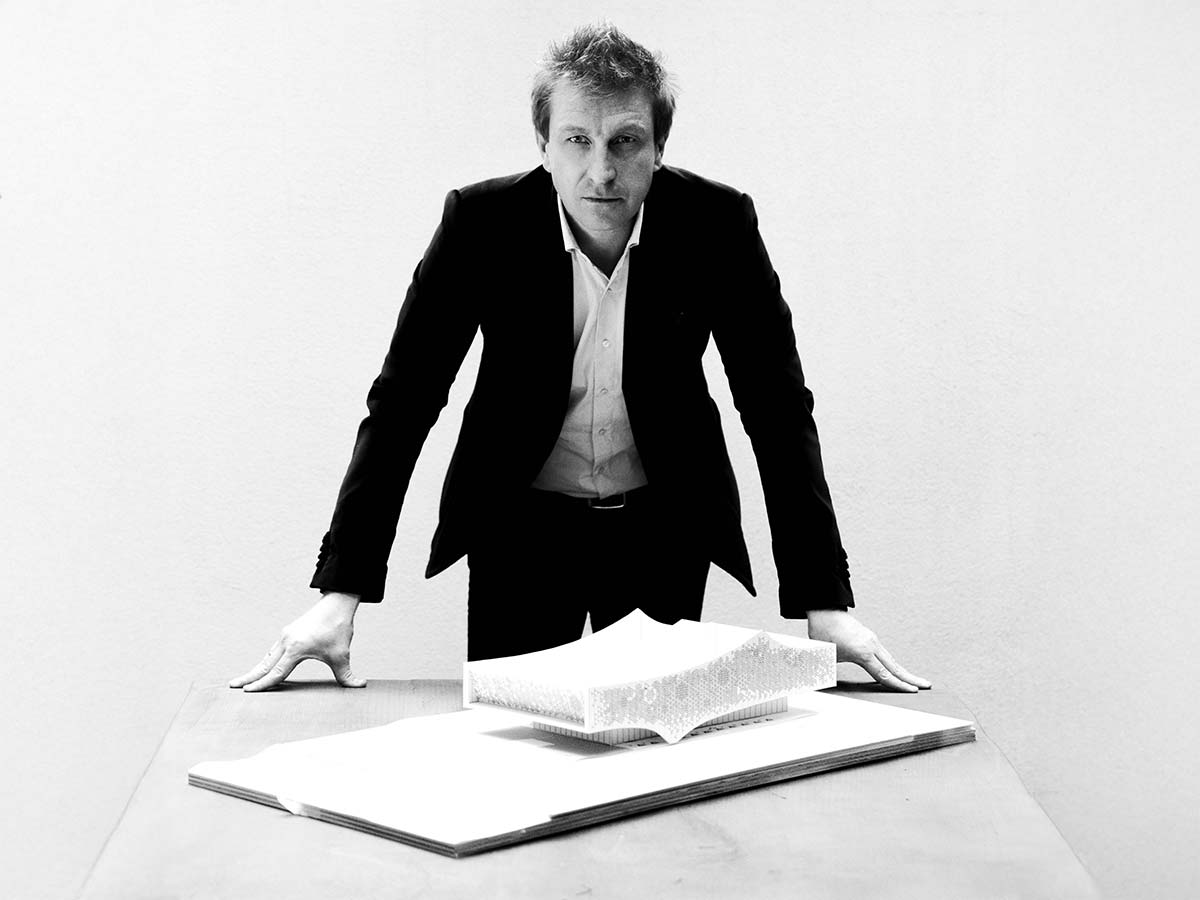
Andrea Boschetti is a citizen of the world, but above all he is a citizen of the city: a designer with very clear and probably definitive choices, talking to him about architecture and urban planning means taking a dip into Milan as a place to live and not just “to drink”. His studies helped him bring to the surface an identity that was already revving up, and his professional career has been marked by travel and rough weather (because he has a bit of healthy intemperance): studies in Venice, seven years in Russia, the United States and much of Europe, and… lots of ceramics, done the Boschetti way. And despite a vocation for social issues and reasoned, concrete sustainability, the world of luxury knocked so insistently on his door that Boschetti was persuaded to join the joint venture The One Atelier, which deals with luxury on a daily basis.
You speak passionately about inclusion, rights and exclusivity that actually excludes, which are very “social” issues that the so-called world of luxury does not usually consider. But luxury brands have often chosen you: how would you describe your relationship with them?
My education has been very “social” and I am proud of that, I cherish it and nurture it. I studied in Venice with Manfredo Tafuri, Massimo Cacciari and Gino Valle, and I was taught urban planning by Bernardo Secchi, who wrote the book “La città dei ricchi, la città dei poveri” (The City of the Rich, the City of the Poor). I would say that the influence was already clearly visible. Then there is my soul, a little cynical and pessimistic, which believes that they chose Metrogramma and myself because of my passion for certain issues. I hope that this may happen in the not too distant future. They probably came to us because of our ability to listen, our way of organising requests and reading and translating the DNA of a brand in concrete terms. However, there were some signs with certain players, some of whom had roots and a sensitivity that also touched on social issues.
Are you referring to Karl Lagerfeld?
Yes, exactly. Karl Lagerfeld was a man who, especially in the last years of his life, donated a lot of money to research focused on culture and protecting the planet.
Luxury, wealth and sustainability: three words that struggle to go together?
Certainly, but the world of luxury, at least from my point of view, has sent and continues to send some signals of change. Until not long ago, luxury required large budgets and designers capable of showcasing wealth in an exaggerated way, often bordering on vulgarity and arrogance. It did not need creativity, cultural aspects, innovation and sustainability (which could always be dealt with a bit of convenient greenwashing by adding the savings of a few kW with solar panels and ‘voilà, we’re sustainable’). Paradoxically, sustainability, or a certain type of sustainability, has also legitimised luxury and thinks it has brought it through the front door into the Green room. It is clearly a fad, but it exists and should probably be cultivated so that it can grow and become an integral part of a different culture, perhaps with the arrival of new generations in corporate management.
What about innovation? Haven’t we mentioned it yet?
It is a key word today, even for luxury. Unlike years ago, today’s luxury architects find solutions through innovation in construction techniques and urban planning processes, optimising spaces. Without going too far back in time, without bothering with the Renaissance, history tells us that it was the designers who worked with wealthy clients who succeeded and became famous thanks to innovation and where it was possible to experiment: just look at what Portaluppi and Ponti did.
Let’s go back to the city and talk about the city: can you tell me about Radical Flow?
Look, I’ll answer you as if we were friends, not as a professional, because I’m going through a period of intellectual fatigue and disappointment on this subject.
Radical Flow was born with the impetus to overcome some of the barriers that the city’s culture has created, obstacles that have slowly built up over time and are now barriers.
Radical Flow aims to be a hotbed of ideas, spontaneously bringing together experienced designers, young architects, students, associations and universities to form a laboratory of ideas, open as much as possible to anyone who wants to join, regardless of their personal specialisation. The first shared goal was to find solutions to free up space in Milan, to eliminate cars on pavements and return public land to citizens. Abroad, Vienna in particular, but also France, Belgium and Spain, are moving in this direction.
Want to know what happened? What happened was that many colleagues, especially those involved in urban planning, got in the way and created opposition, thinking that Radical Flow was a system for winning contracts and projects. Nothing could be further from our minds; everything was done for free, with everyone self-financing their time in a disinterested manner. All this disappointed me, but I am someone who does not give up; I regenerate myself and return to the fray.
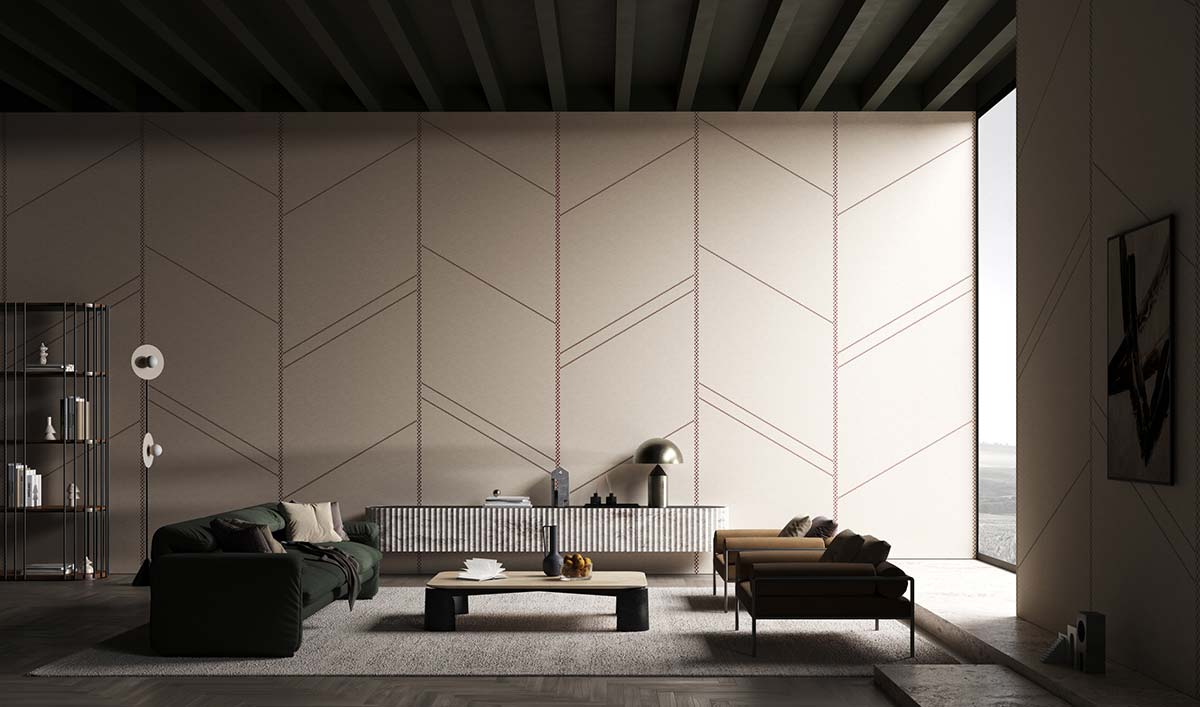
Let’s take a leap and link the theme of wealth and poverty to the world of ceramics, which still carries with it a certain amount of negative mythology, as if it were a poor product. What do you think?
Well, it’s an interesting topic, and a lot has happened in this area over the last 15 years.
Until about 2012, tiles were mainly printed using aggregates, then a technological revolution came along like a tornado, making it possible to produce ceramics that looked more and more like natural materials, stone, wood and marble. Then some companies started commissioning collections from designers, followed by the arrival of large slabs, which are not easy to lay and are produced using highly sophisticated technology, not suitable for everyone. Products incorporating new special materials have arrived on the scene and customisation has increased.
All this has created a world of customisation, and today I think that in many cases ceramics ultimately cost more than natural stone, something that many people are unaware of. The sector still lives too often on routines inherited from the past. But I think that the example set by some large groups and small boutique companies that have put a lot of work into colour and graphics will mean that this feeling of still being the little brothers of the industry will tend to disappear.
Beyond large plates, what does the market tell us?
It tells us that an opposite world is growing, that of small formats with an important artisanal component, which, however, marketing and corporate communication tend to underestimate a little, perhaps because “small” represents a return to the past, before automation and intelligent machines, and this causes difficulties for companies that have now plunged in the other direction.