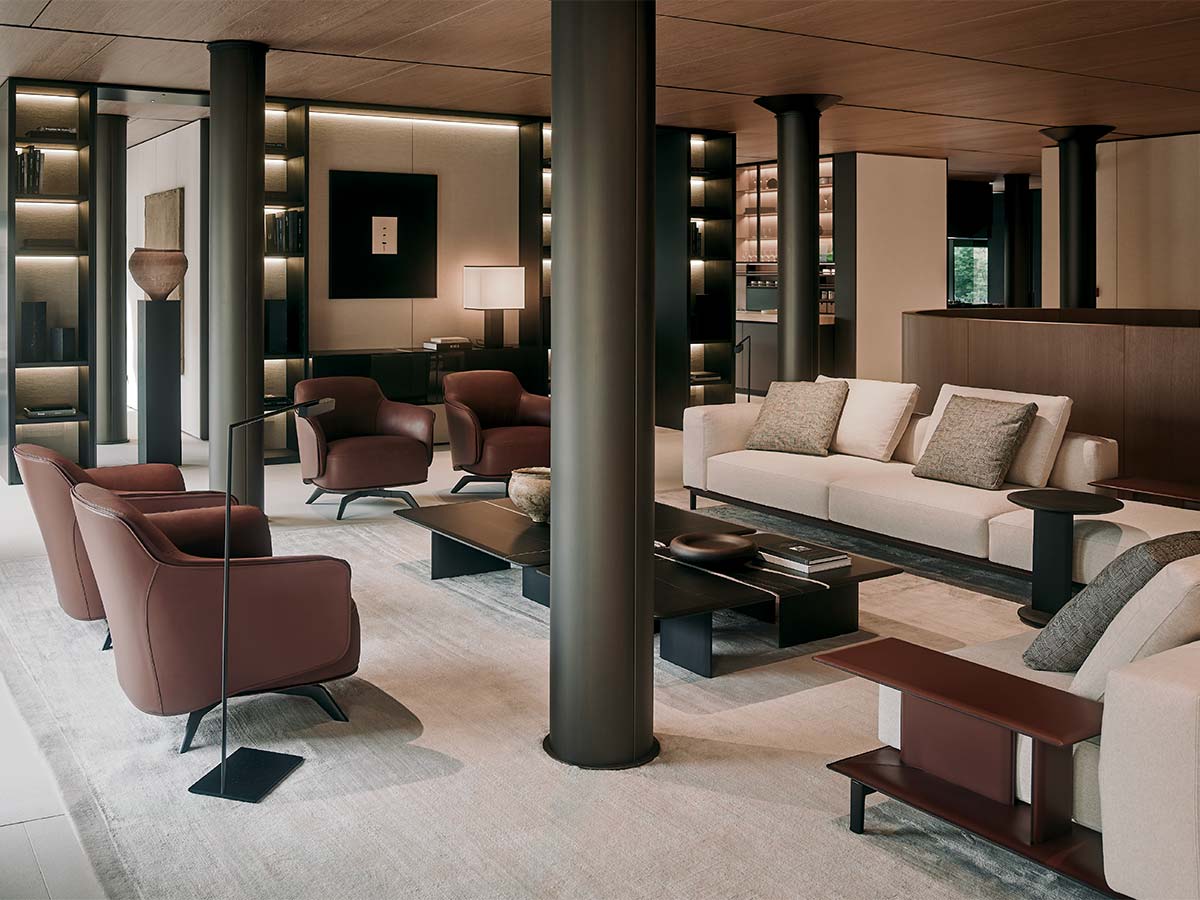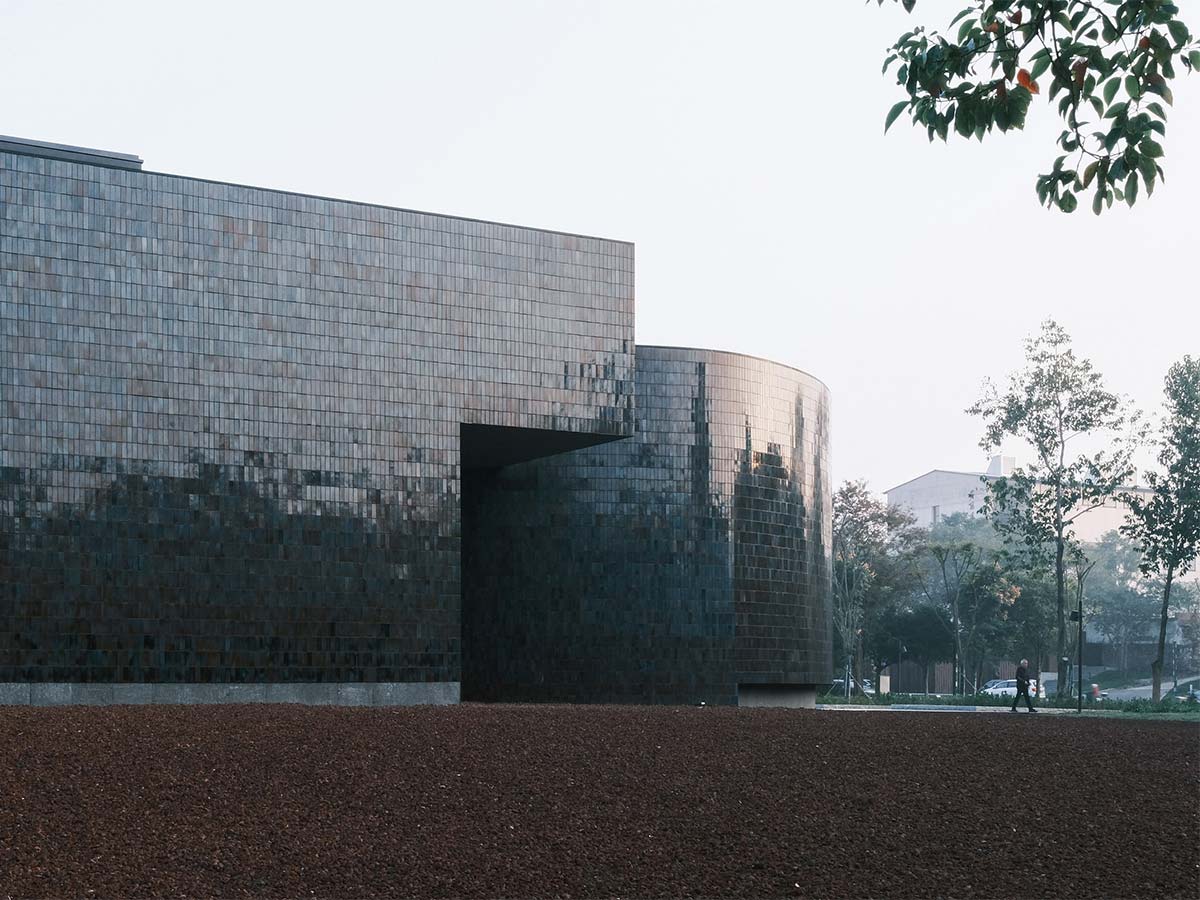
In Yixing, China, Atelier XÜK has transformed the former Zisha mine—exploited for six centuries and renowned for its unique clay—into a museum that intertwines historical memory with contemporary architecture. The Huanglong Mountain Zisha Mineral Source Museum, built on the site where the mine operated from 1972 to 1992, features a spiral exhibition route that guides visitors from the surface down into the old underground tunnels. This “vortex” concept creates a seamless connection between exhibition halls and mining galleries, following principles of minimal intervention and heritage enhancement.
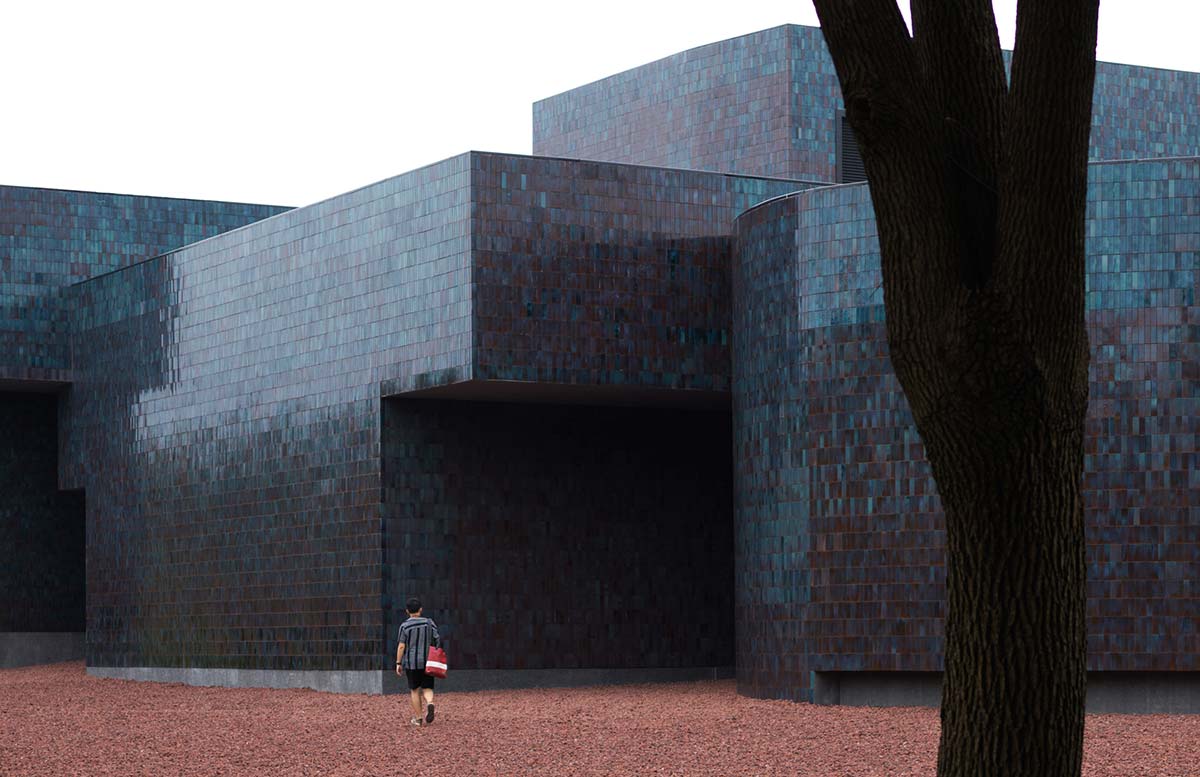
On the exterior, five volumes clad in glazed blue and brown tiles evoke mineral veins and reflect light in shifting tones, inviting tactile interaction with the material. The cladding recalls the qualities of ceramics: beauty, durability, and impermeability. Inside, the same chromatic palette is carried through with terracotta floors, brown-plastered walls, and skylights that modulate natural light.
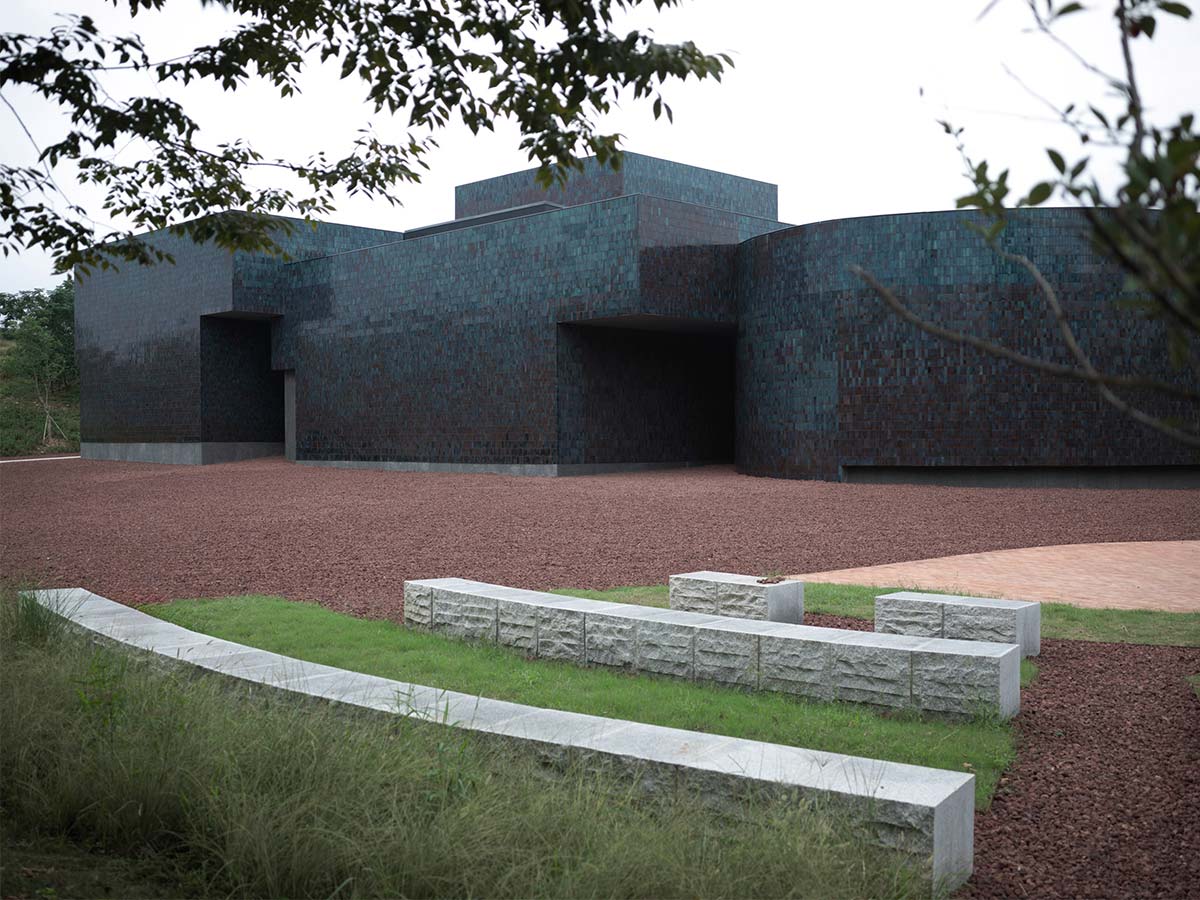
In the underground galleries, the displays interact with the rough stone walls and weathered steel structures, preserving the memory of mining labor. The surrounding landscape, shaped with reddish stones and carved seating, mirrors the ruggedness of the original terrain. With this project, Atelier XÜK—founded by Kenan Liu and Xu Zhang—offers a model of regeneration that transforms disused industrial sites into spaces of culture and identity.
Photo credits: Yiming Yang, Xu Zhang and Shiliang Hu