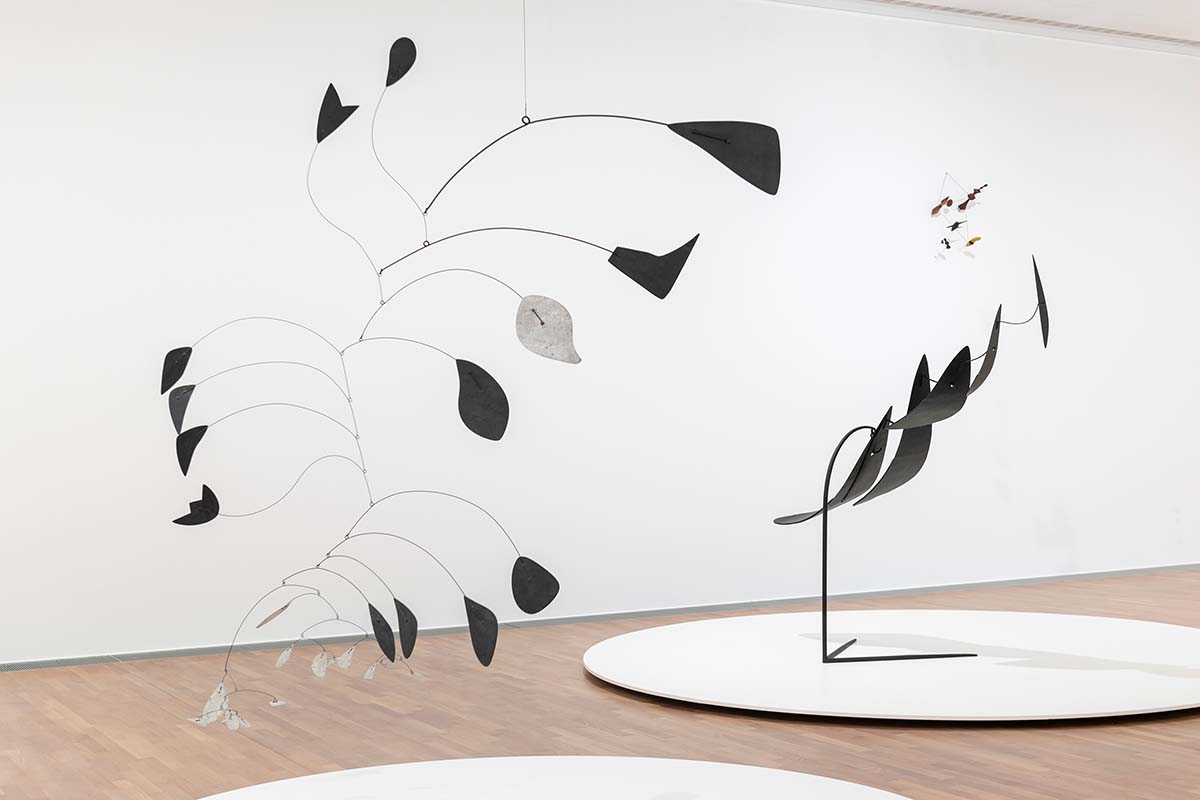
l MASI Lugano – sede LAC ospita la grande mostra Calder. Sculpting Time (fino al 6/10/2024, catalogo Silvana Editoriale), la più completa mostra monografica dedicata ad Alexander Calder da un’istituzione pubblica svizzera negli ultimi cinquant’anni.
Quella di Calder è una figura eccezionale: artista di grande successo, con il suo lavoro ha aggiunto il movimento alla scultura, forma d’arte tradizionalmente statica. Influenzando profondamente anche il design, dagli anni ’50 in poi: non a caso alla Expo 1958 di Bruxelles il suo lavoro venne esposto accanto a quelli di Harry Bertoia e Isamu Noguchi, entrambi scultori/designer. E anche Charles e Ray Eames, di cui era amico, avevano una sua scultura nella loro casa-manifesto di Los Angeles.
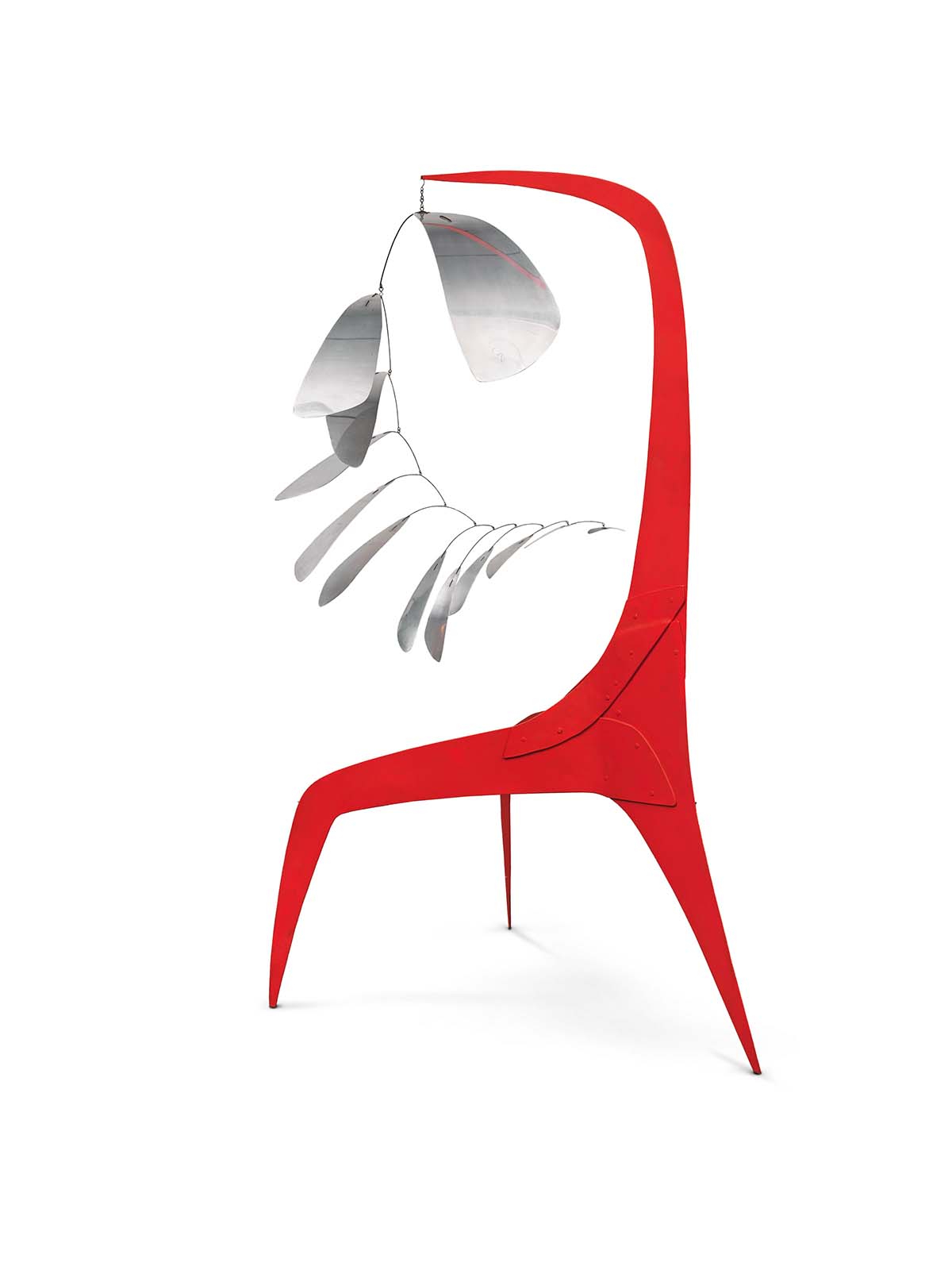
Aluminum Leaves, Red Post, Alexander Calder, The Lipman Family Foundation © 2024 Calder Foundation, New York / Artists Rights Society (ARS), New York
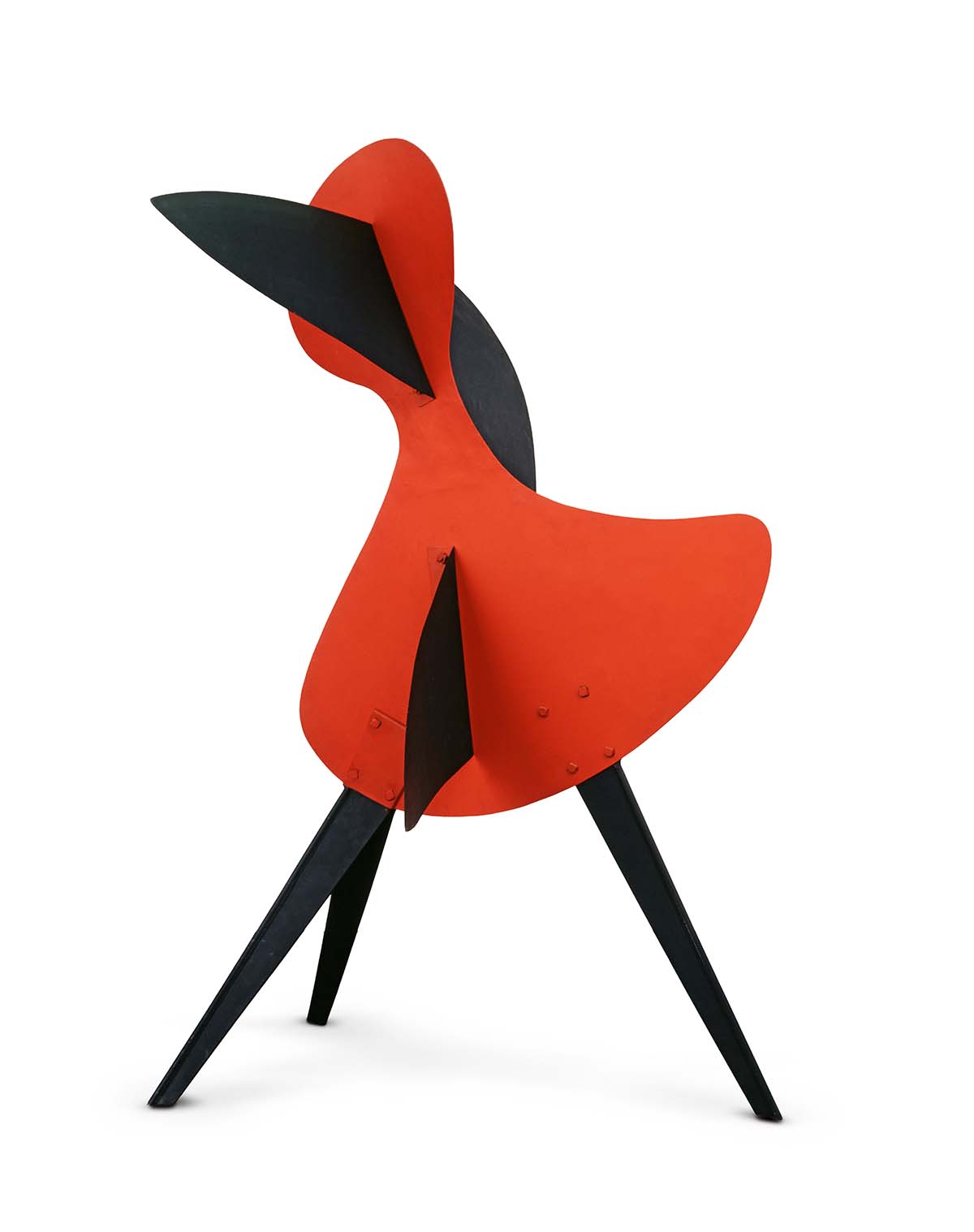
Big Bird, Alexander Calder, 1937, Calder Foundation, New York – Photo courtesy Calder Foundation, © 2024 Calder Foundation, New York / Artists Rights Society (ARS)
La mostra raccoglie oltre 30 opere create, tra il 1931 e il 1960, attingendo da importanti collezioni pubbliche e private internazionali, tra cui la Calder Foundation di New York dalla quale proviene un ampio corpus di opere. Concepita come spazio aperto, libero da pareti, Calder. Sculpting Time raccoglie opere che vanno dalle prime astrazioni o sphériques fino a una selezione di mobiles più recenti, stabiles e standing mobiles di varie dimensioni. In mostra anche una selezione di constellations, un termine proposto da Marcel Duchamp e James Johnson Sweeney per le sculture dell’artista realizzate nel 1943 in legno e filo metallico.
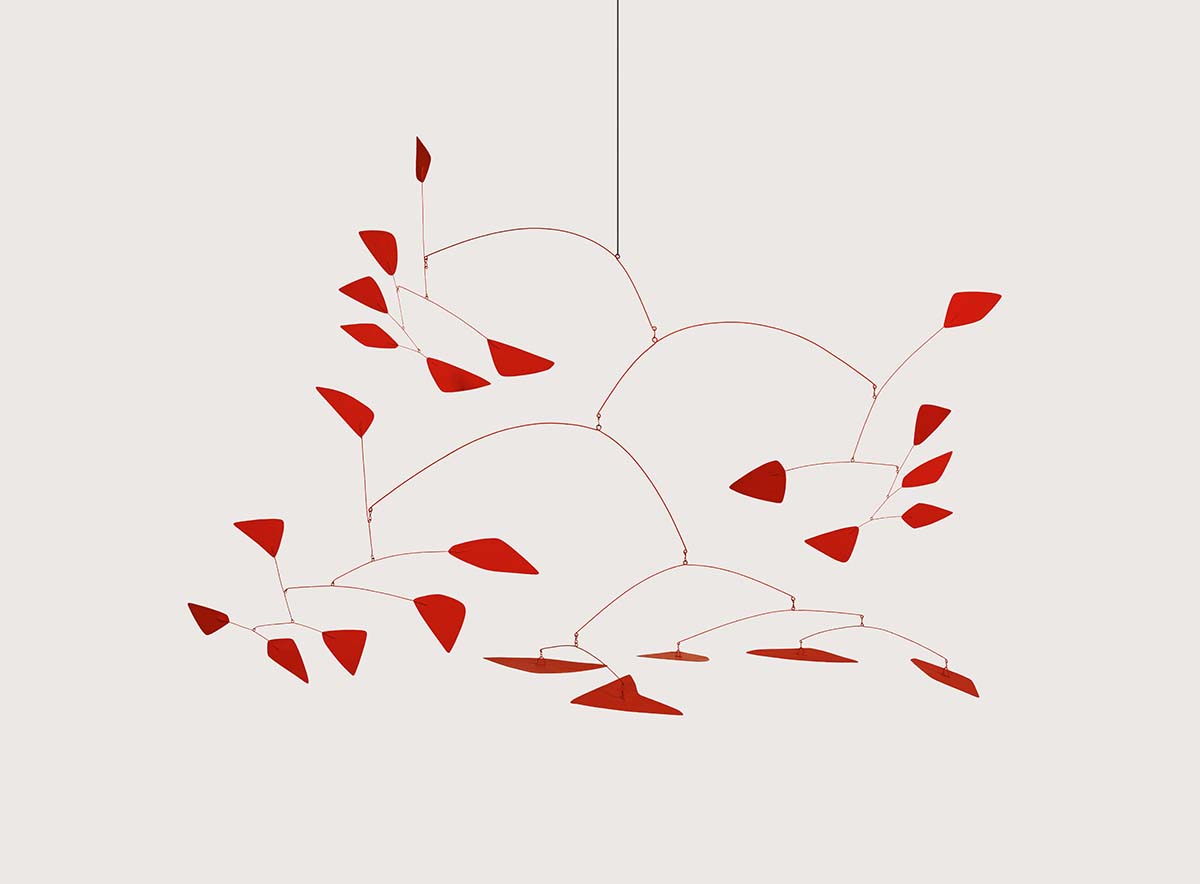
Quatre systèmes rouges, Alexander Calder, 1960, Louisiana Museum of Modern Art, Humlebæk, Denmark. Donation: The New Carlsberg Foundation. Photo – Louisiana Museum of Modern Art / Poul Buchard / Brøndum & Co, © 2024 Calder Foundation, New York / Artists, Rights Society (ARS), New York
Del suo lavoro, Fernand Léger scrisse “è qualcosa di serio nonostante non dia l’impressione di esserlo”. Una delle innovazioni più importanti di Calder è stata quella di aver incorporato il movimento nelle sue composizioni. I suoi mobiles – termine coniato da Duchamp – sono sculture cinetiche, composizioni in continua mutazione. L’ultima sala della mostra ospita, di fronte a una grande vetrata che si apre sul lago e sul panorama, l’imponente mobile Red Lily Pads (1956), opera che risponde a ogni minimo cambiamento dell’aria e della luce, vibrando nell’imprevedibilità del tempo e dei suoi diversi momenti.
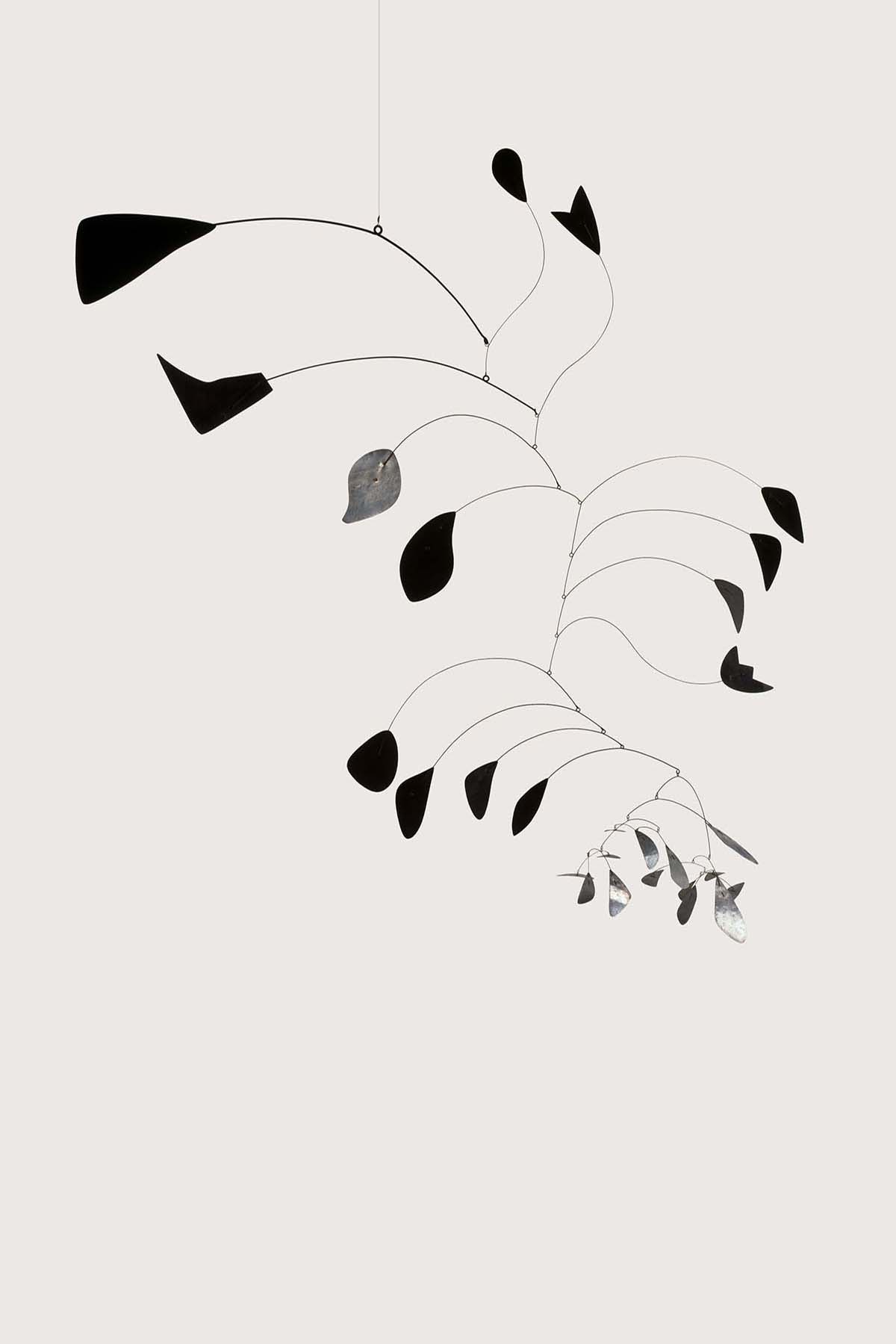
Arc of Petals, 1941, Alexander Calder, Peggy Guggenheim Collection, Venice © 2024 Calder Foundation, New York / Artists Rights Society (ARS)
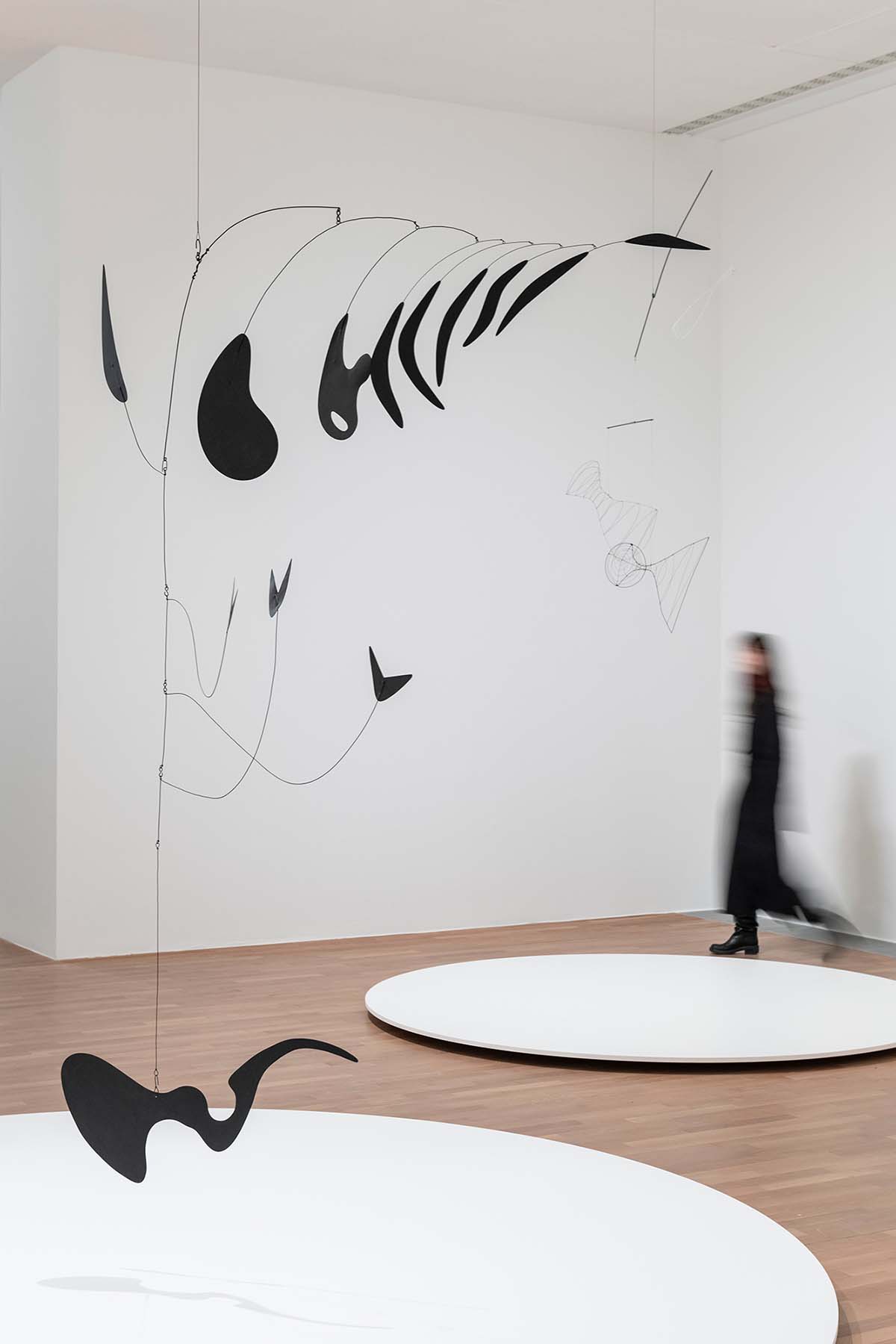
Dettaglio dell’allestimento della mostra “Calder. Sculpting Time,” con i grandi dischi bianchi pensati come “piedistalli” per le sculture sospese.
«Calder ha creato organismi metallici che possiedono le qualità della leggerezza e della varietà in forme biomorfiche sottili, che sono allo stesso tempo resistenti e fragili, dinamici ed estetici, solidi e ipersensibili», spiegano Carmen Giménez e Ana Mingot Comenge, curatrici della mostra.
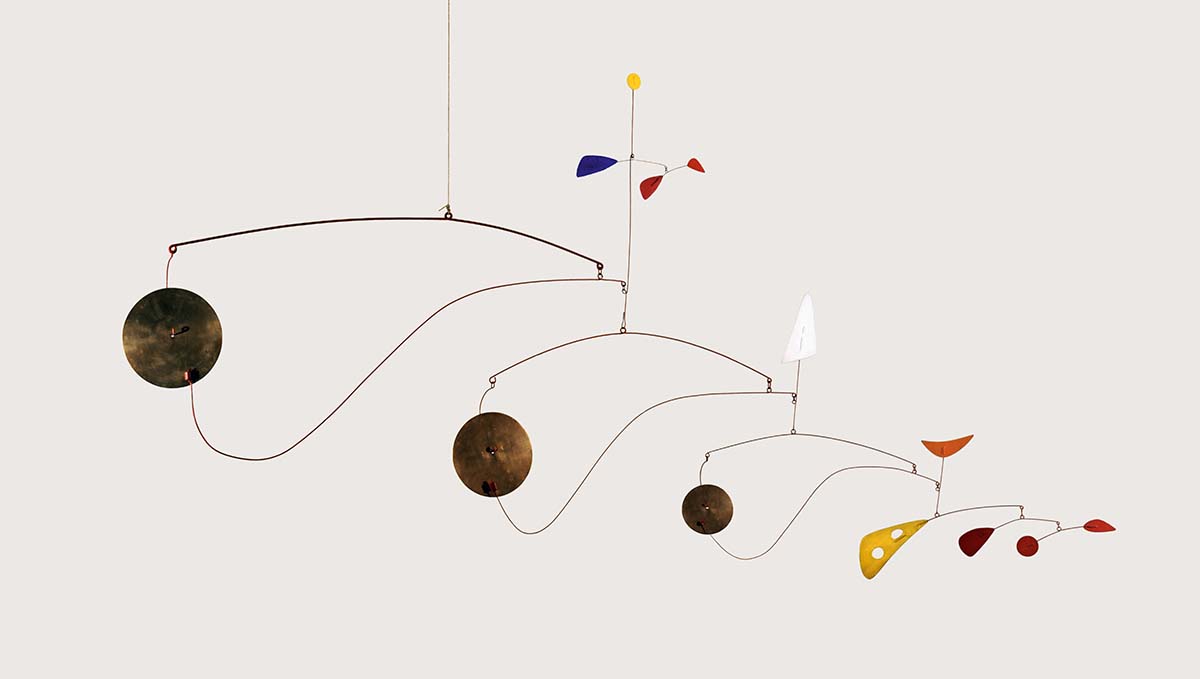
Triple Gong, 1948, Calder Foundation, New York Photo courtesy Calder Foundation, New York / Art Resource, New York © 2024 Calder Foundation, New York / Artists Rights Society (ARS), New York
Interessante e poetica la storia delle constellations: a causa della scarsità di lastre di metallo durante la Seconda guerra mondiale, nel 1943 Calder iniziò una nuova serie di sculture astratte realizzate con fili metallici e legno, appese alla parete ad altezze inaspettate.
Foto allestimento – Luca Meneghel © 2024 Calder Foundation, New York / Artists Rights Society (ARS), New York