This year’s edition of Milano Design Week, from 17 to 23 April, was intense and particularly rich. Perhaps because the event returned, for the first time in three years, to its traditional mid-April appointment, sowing an effervescent energy in the city and confirming its role as the international capital of design.
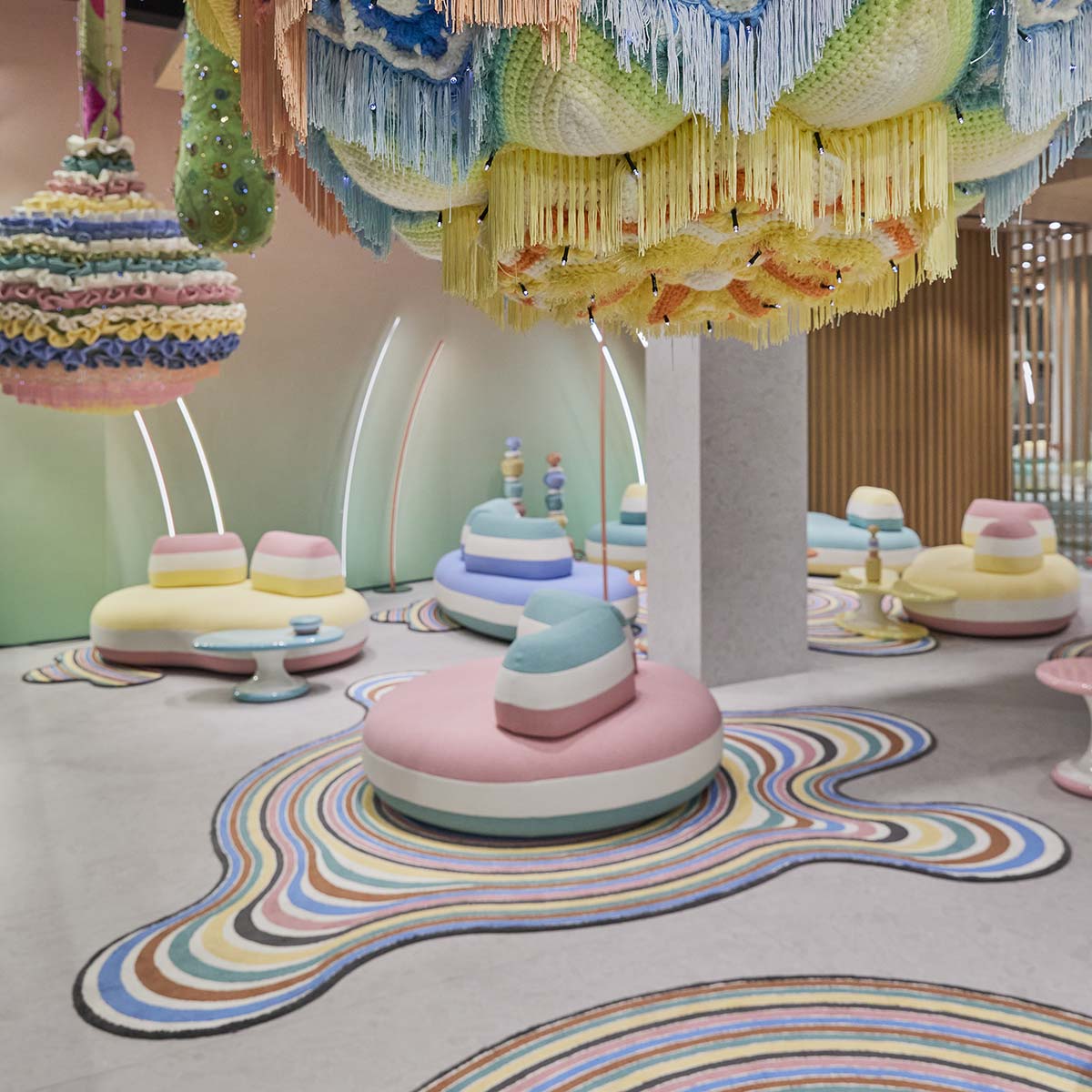
Roche Bobois, Milan – Photo © Baptiste Le Quiniou
Colour was one of the protagonists of the latest edition of Design Week. In fact, some of the installations we saw in the city featured very precise colour choices: think of the constant presence of red light that characterised Cassina‘s exhibition ‘Echoes: 50 years of iMaestri‘, which was staged in a bank vault inside Palazzo Broggi, the former headquarters of Unicredit in Via Tommaso Grossi 10, overlooking Piazza Cordusio.
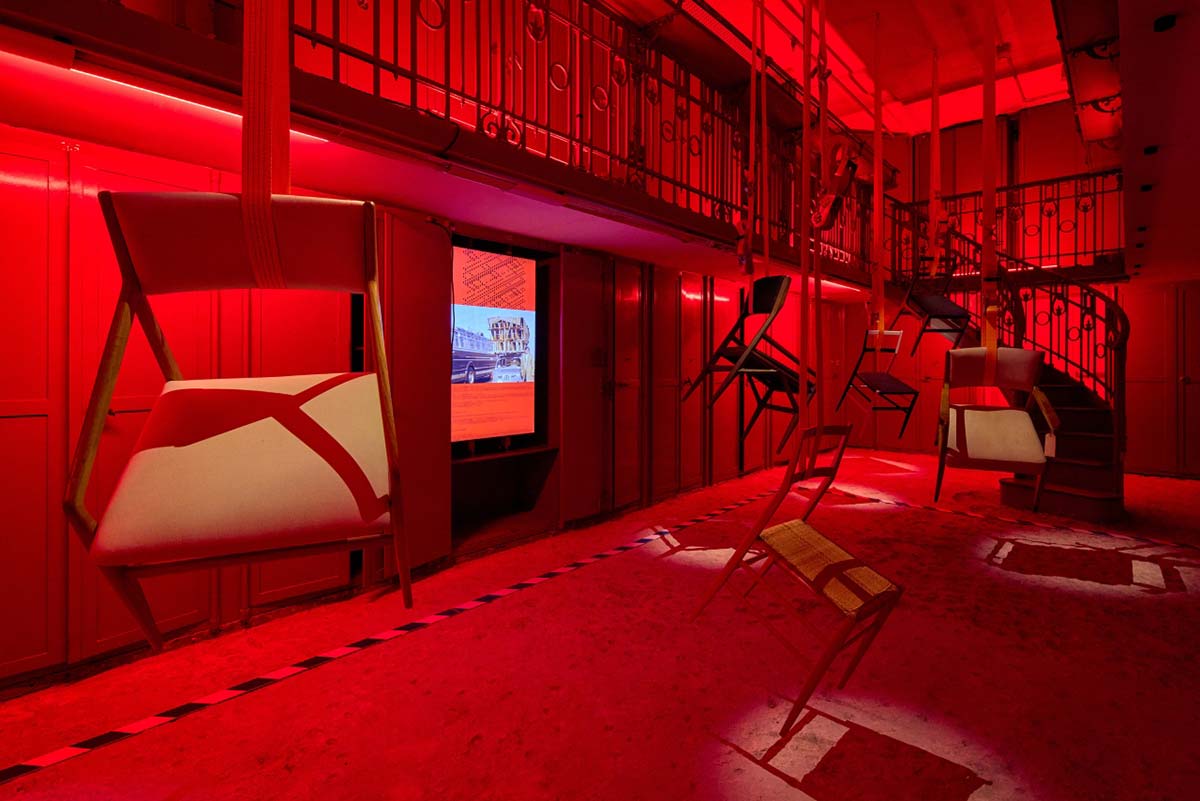
Echoes: 50 years of iMaestri by Cassina – Palazzo Broggi, Milan – Photo © Agostino Osio
Under the curatorship of art director Patricia Urquiola together with Federica Sala, the Meda-based brand showcased its icons through a scenographic five-stage itinerary that recounted some of the most important designers of the 20th century, from Le Corbusier to Vico Magistretti and Marco Zanuso, passing through a selection of Gerrit T. Rietveld‘s most representative models. The colour red (distinctive of the Cassina brand) tinged the windows of the building, anticipating from the outside the contents of the exhibition and creating a rarefied and all-embracing atmosphere that enveloped the visitor as soon as he stepped inside.
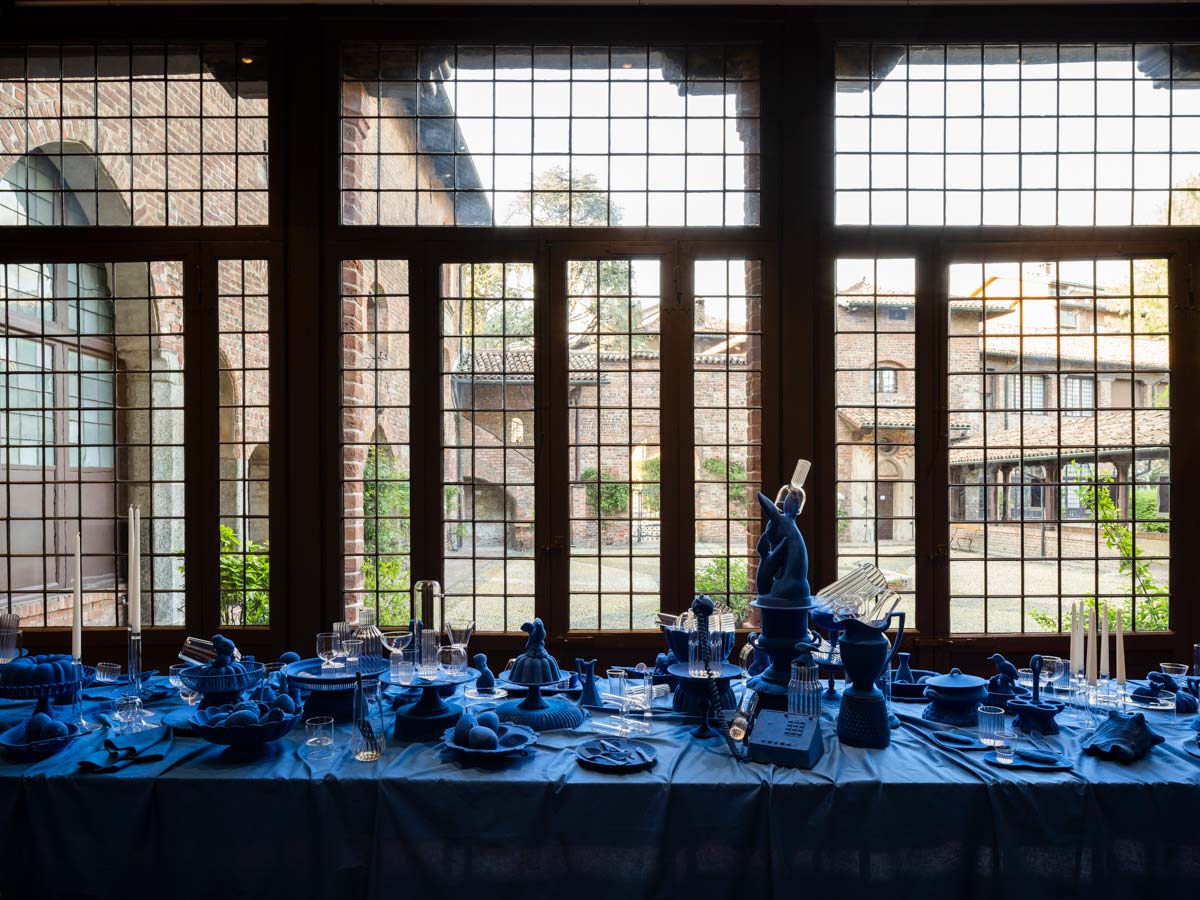
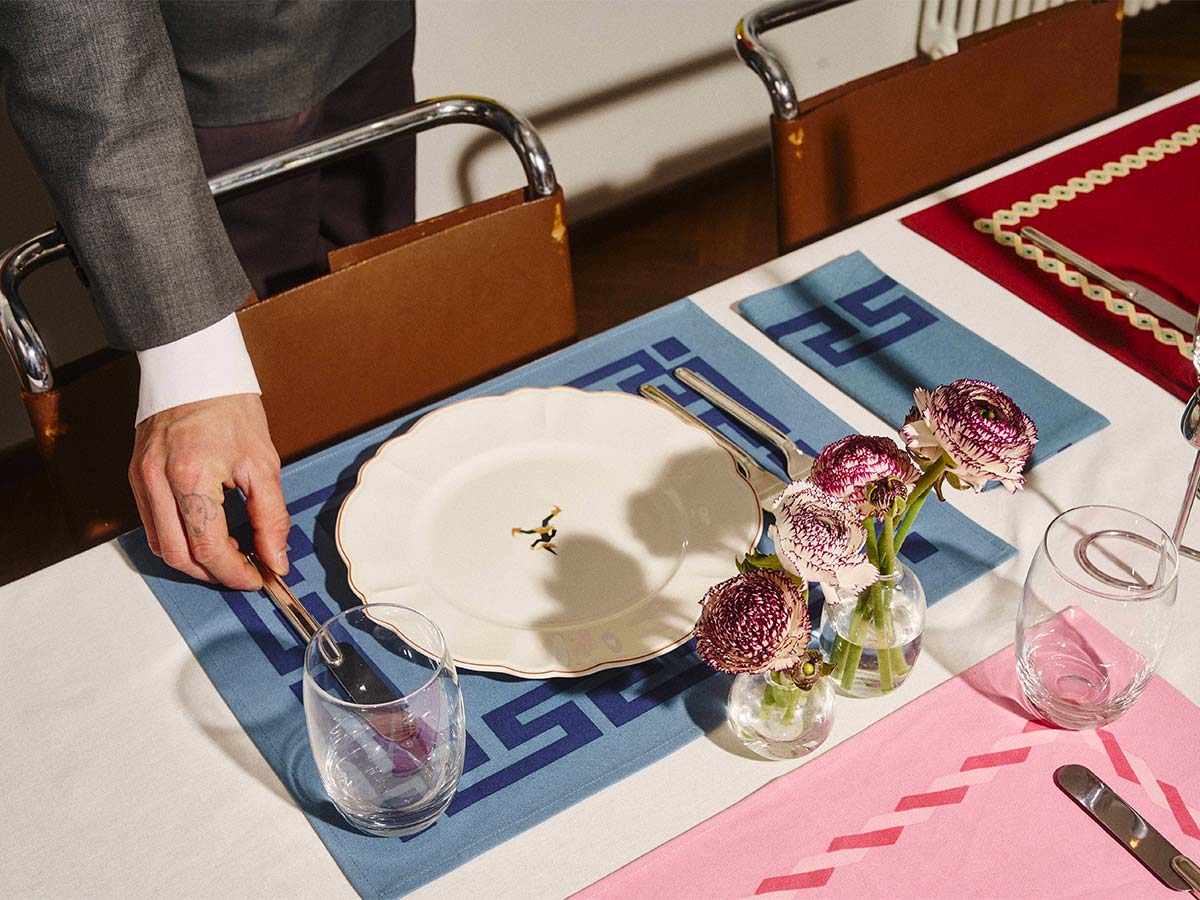
STILL NOW – The Dinner by Fferrone – Villa Mirabello, Milan – Photo © Luca Rotondo
The primary Klein blue unabashedly characterised the installation that the US glass brand FFerrone brought inside Villa Mirabello, a 15th century private residence located in La Maggiolina, a historic area of small villas on the outskirts of the Isola district. The iconic glassware collections of Felicia Ferrone, the brand’s founder and creative director, stood out against a monochrome Klein blue background, placed on a large table reminiscent of a Renaissance banquet.
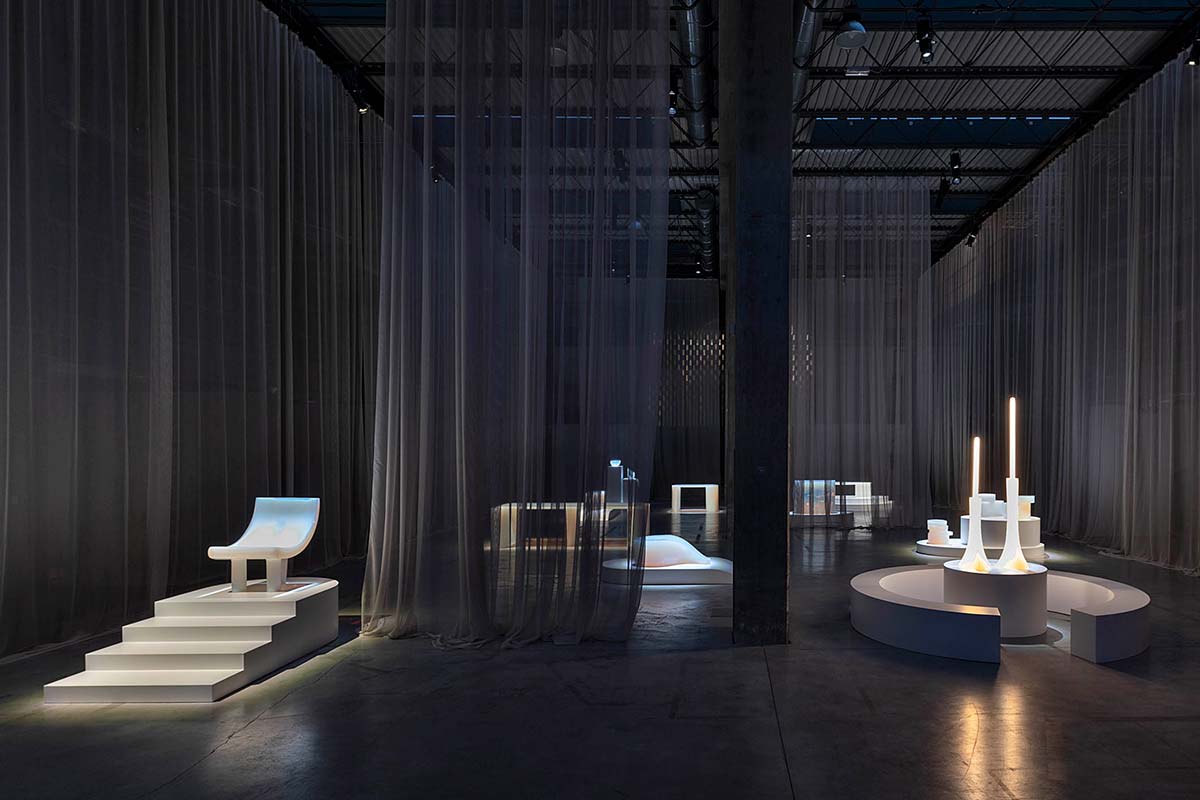
Objects of Common Interests by Studio Vedèt for Nilufar Depot, Milan – Photo © Ruy Teixeira
Colour, in one of its transversal components, which is translucence – the property that allows light to partially pass through a material and partially reflect it –, was also at the heart of the set-up conceived by Studio Vedèt for Nilufar Depot. Here, in the Depot’s central arena, the new iridescent resin furniture set by the New York-based Greek studio, Objects of Common Interests, was on display. Thanks to an innovative technique based on the processing of liquefied resin, the pieces retain their diaphanous reflection.
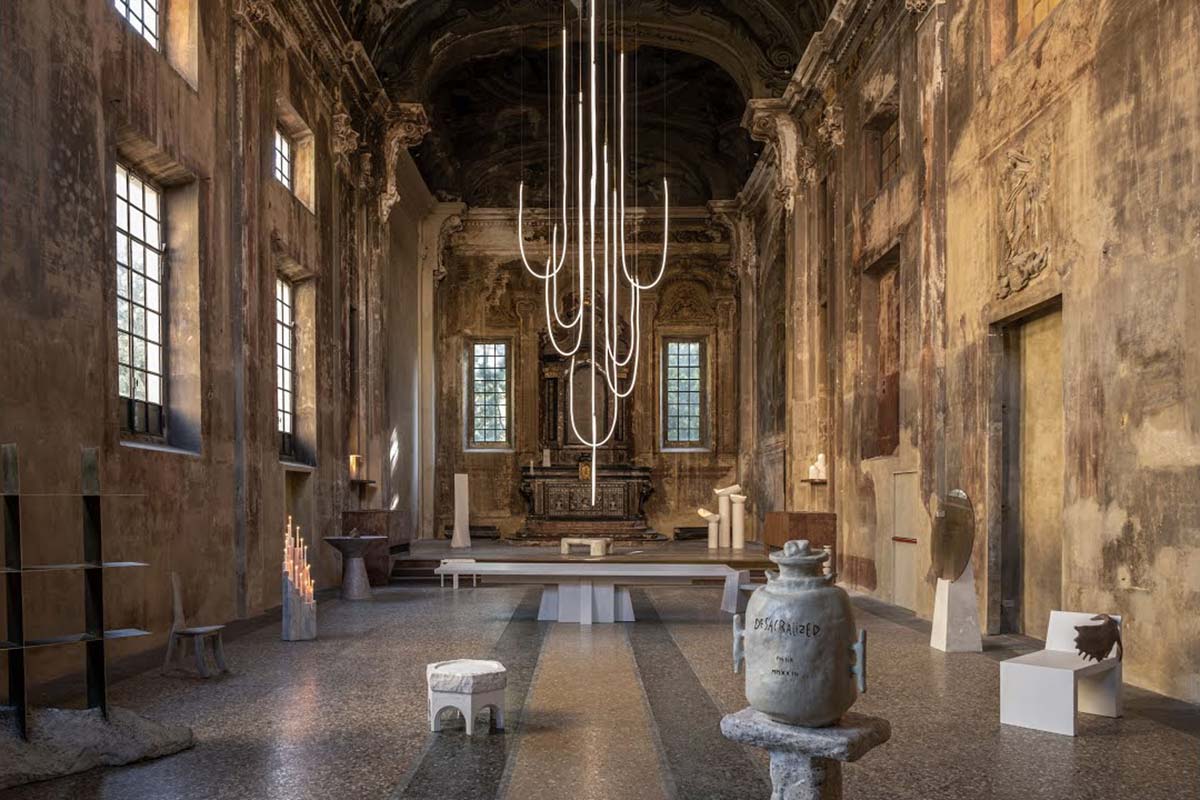
Desacralized by Galerie Philia – San Vittore & 40 Martiri Church, Milan
Unusual locations were a refrain throughout the week: some too far from the centre in relation to the (little) time available to visit them, others definitely not to be missed. More than one church lent itself to hosting the exuberant creativity of this edition: San Vittore e 40 Martiri, a deconsecrated church closed to worship at the end of the 18th century that stands in Piazzale Corvetto, functioned perfectly as a theatrical backdrop for Galerie Philia‘s ‘Desacralized‘ exhibition, which brought a score of its international artists, including Studiopepe and the Ukrainian studio Faina.
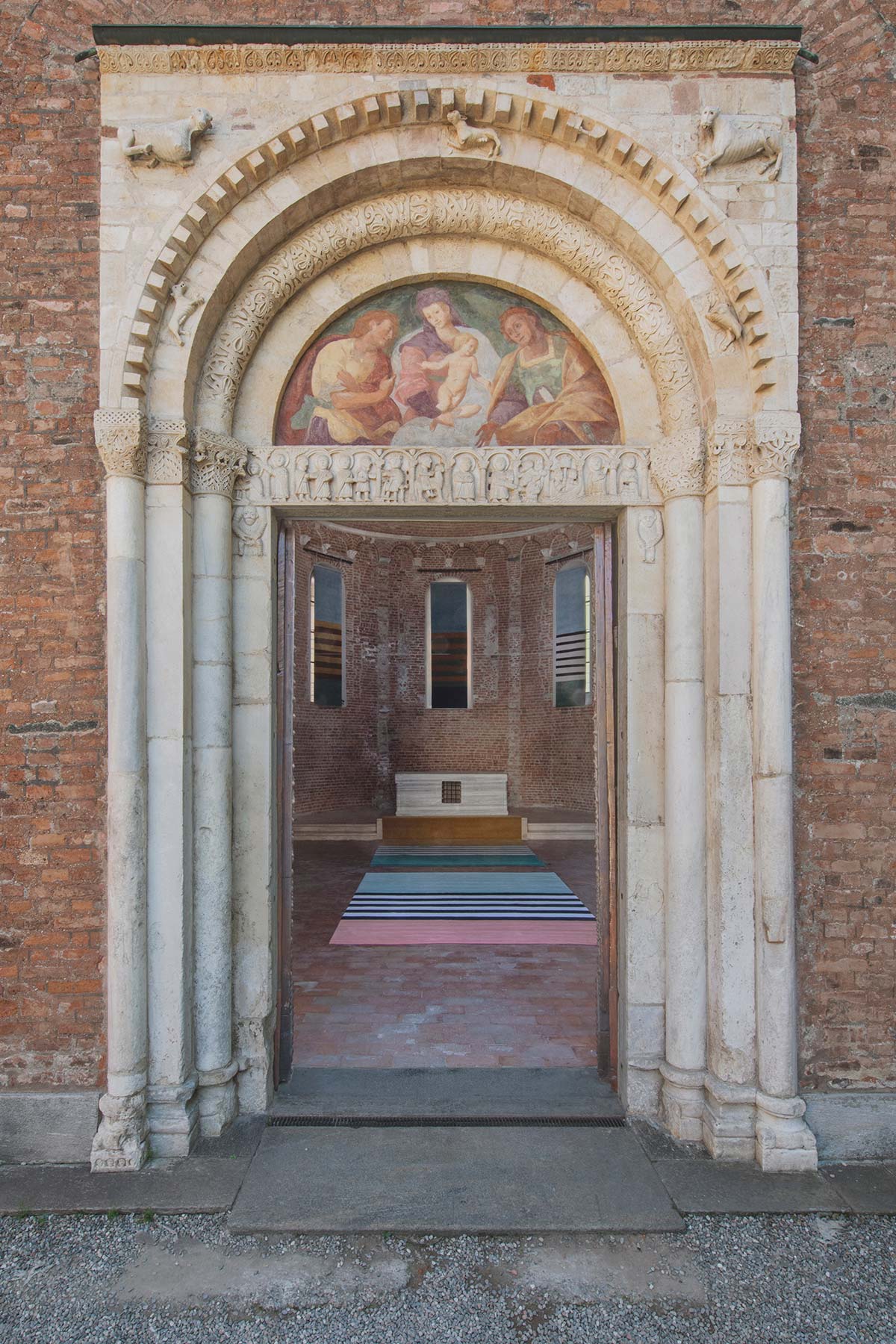
Le Arcs by Charlotte Perriand for cc-tapis – San Celso, Milan – Photo © Alejandro Ramirez Orozco
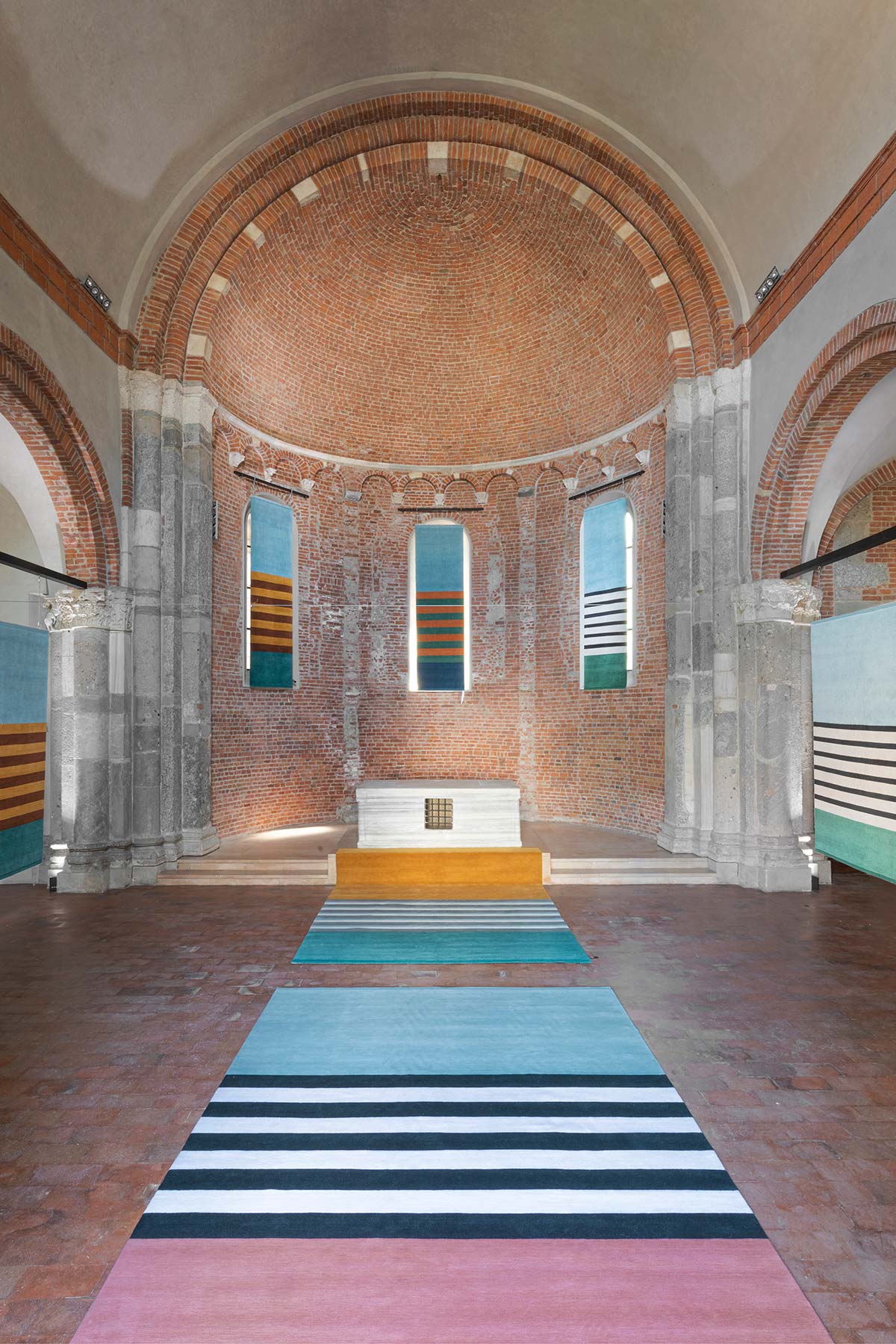
Le Arcs by Charlotte Perriand for cc-tapis – San Celso, Milan – Photo © Alejandro Ramirez Orozco
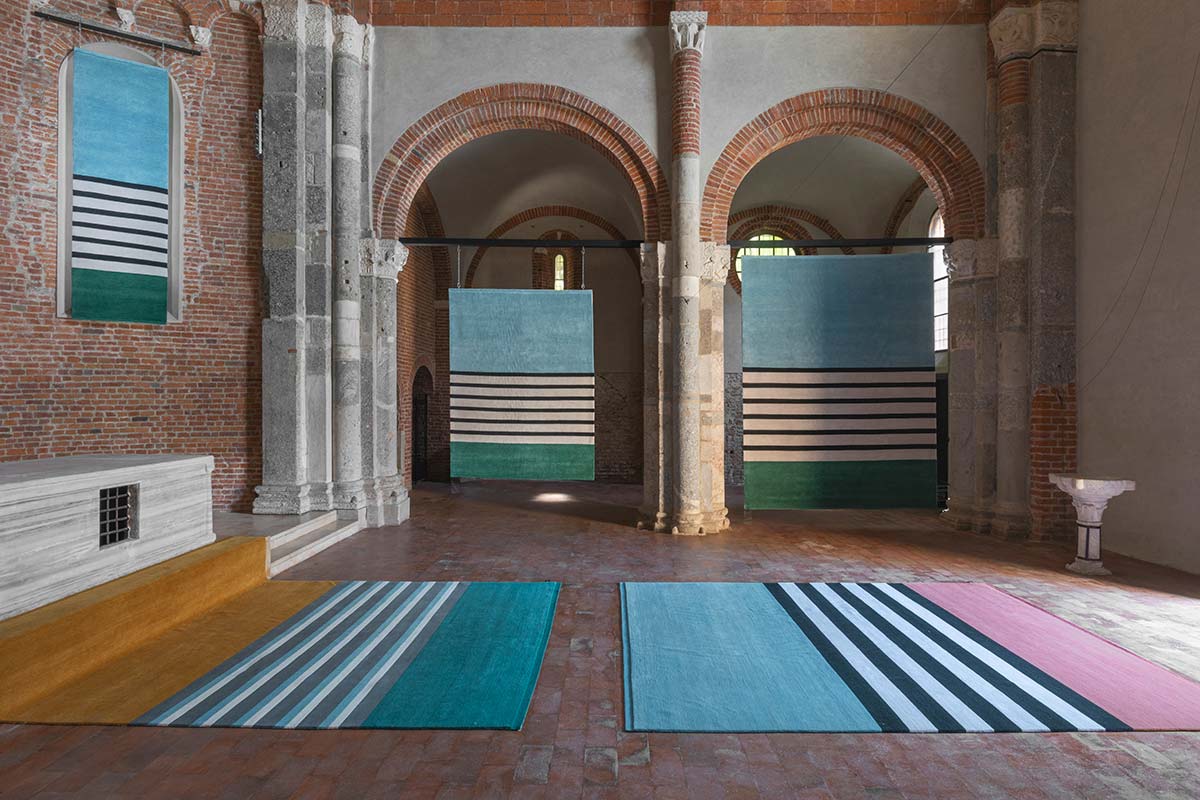
The centrally located San Celso Church in Corso Italia 37, on the other hand, hosted Charlotte Perriand‘s series of five Les Arcs carpets, produced by cc-tapis. Here, Milanese curator and set designer Michela Croci introduced a new perspective on the placement of carpets in space, guiding the viewer’s gaze from bottom to top. And not far away, the church of San Paolo Converso also opened its doors to let in a fifteen-metre long private jet and a triptych of jeans-shaped wardrobes, all made of recycled jeans by G-Star and conceived by Dutch designer Marteen Baas.
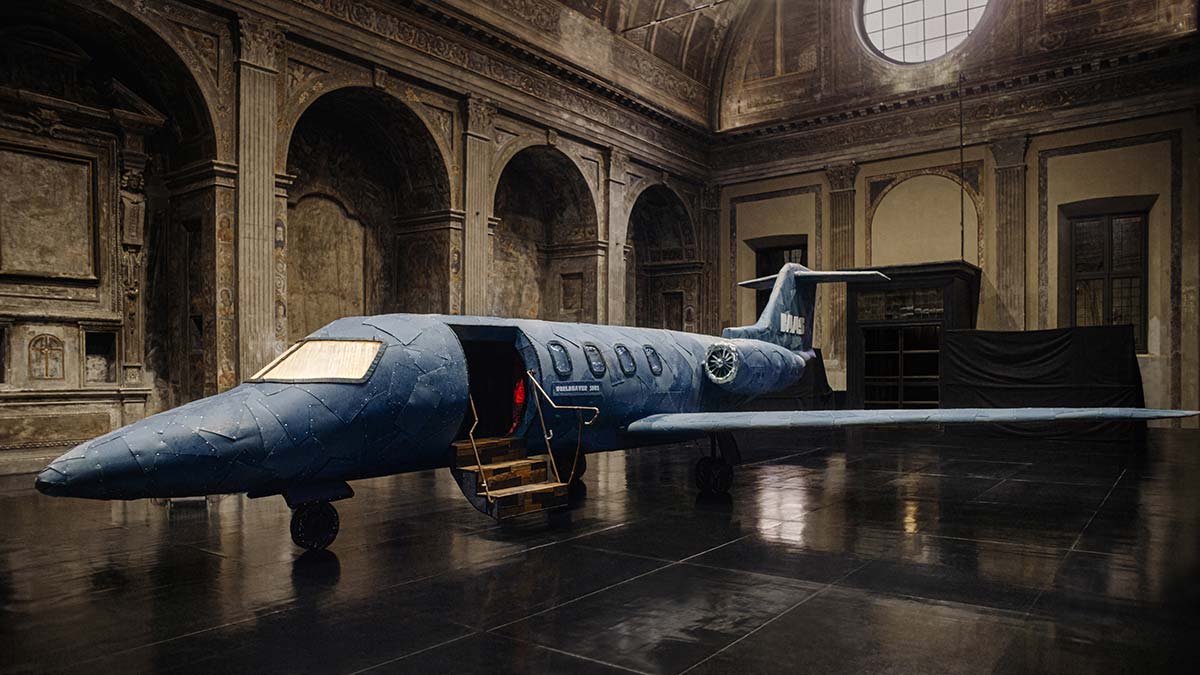
More or Less by Maarten Baas for G-Star Raw – San Paolo Converso Church, Milan – Photo © G-Star Raw
This need to present objects against the backdrop of well-orchestrated and evocative sets is typical of the language of art, another major protagonist of the busiest design week of the year. Think of the Zaven portal, which welcomed visitors to the Circolo Filologico in via Clerici, with the words ‘Objects Speak. Poems Act‘ engraved on the portals at the entrance, which sounded like a visual verb poem.
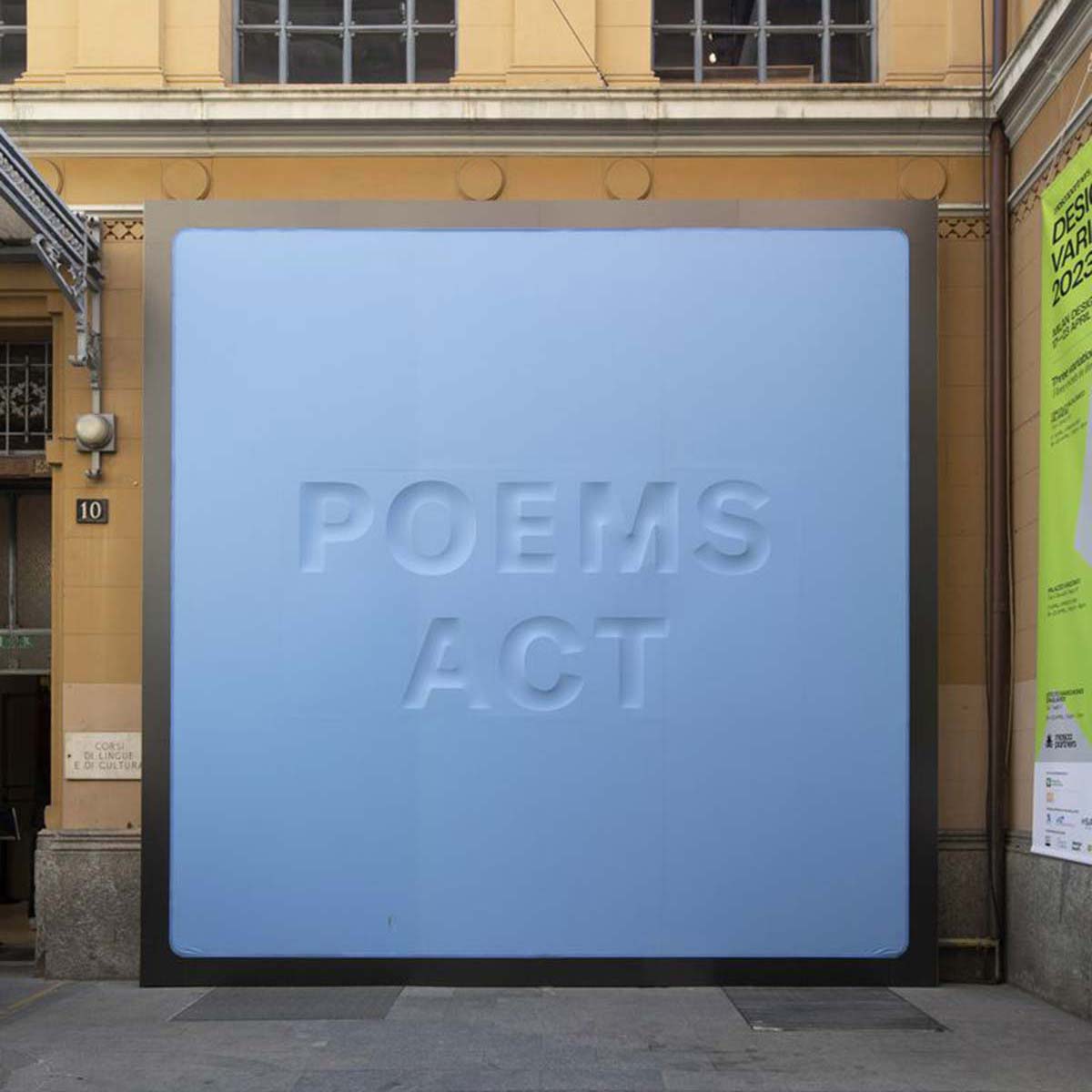
Breath by Zaven – Circolo Filologico, Milan
Or the installation by artist Agostino Iacurci, who transformed the iconic office tower built by Arrigo Arrighetti in 1955, now close to demolition, with the site-specific work ‘Dry Days – Tropical Nights‘. And the pastel-coloured one created by Portuguese artist Joana Vasconcelos for Roche Bobois.
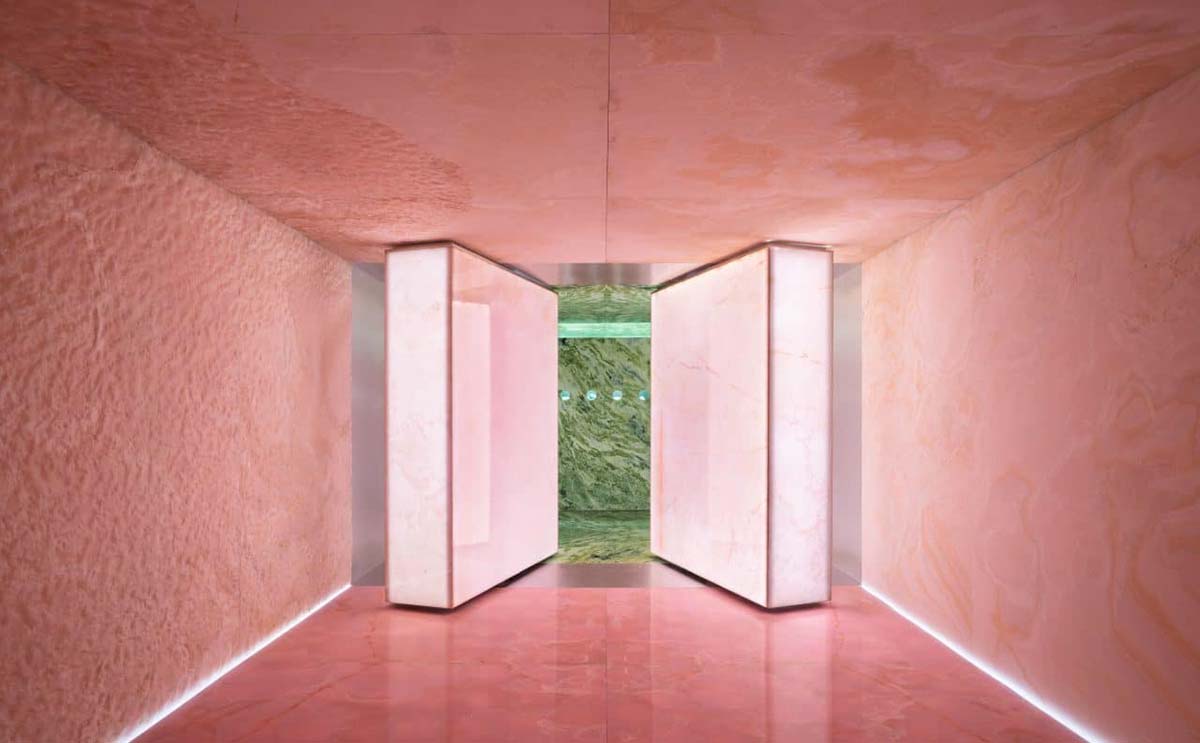
Ellen Van Loon & Giulio Margheri of OMA for SolidNature – Spazio Cernaia, Milan
Or, finally, the dreamlike and immersive landscapes created by Ellen Van Loon and Giulio Margheri of OMA for SolidNature in the Spazio Cernaia, in the heart of Brera, and by Gaetano Pesce for the Bottega Veneta boutique in Via Monte Napoleone, which the artist has transformed into a cave to offer a unique experience to visitors and present a special edition of bags designed by him.
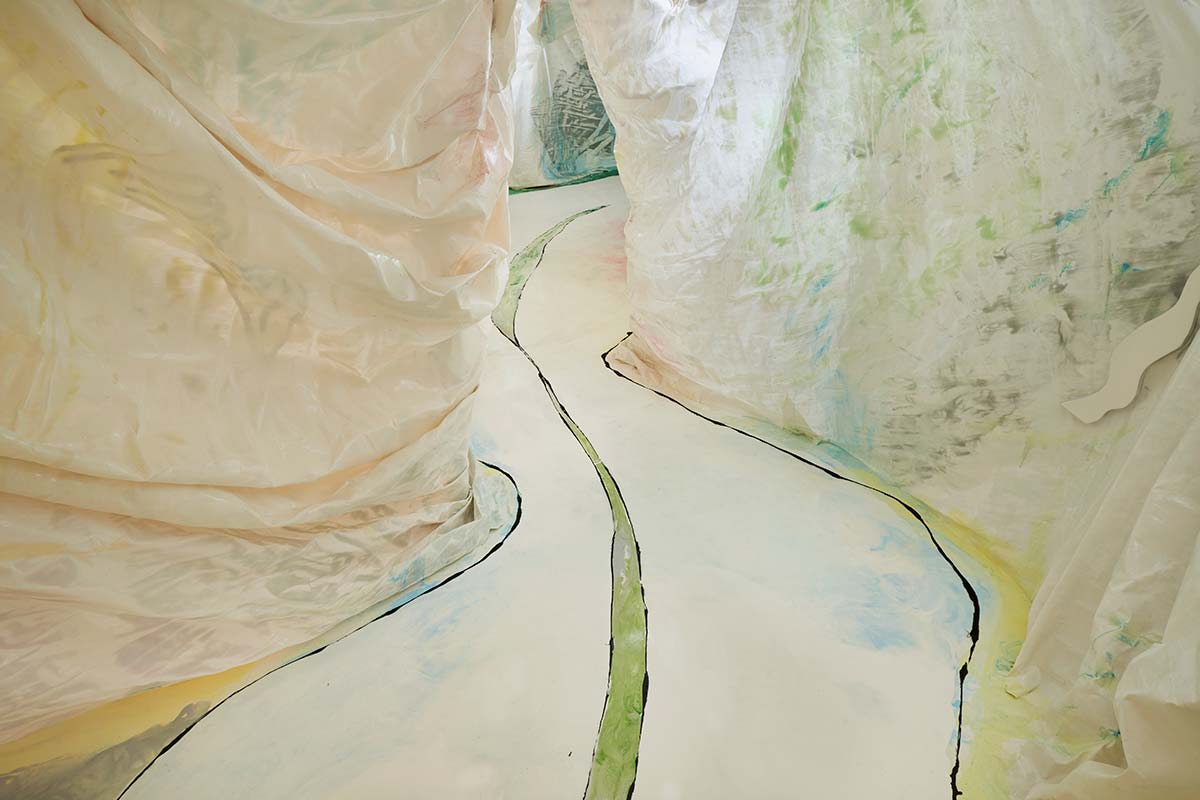
Vieni a vedere by Gaetano Pesce for Bottega Veneta – via Monte Napoleone, Milan – Photo © Matteo Canestraro
This quest for theatricality, which we witnessed during Milan Design Week, seems to have projected objects and collections into a universe where everything is fake, but nothing is fake.