On your website we see the message “Made in Meda.” Isn’t Brianza all the same?
Brianza is not all the same – we’re working to make Meda and its district well-known around the world. We owe it to this city. In the 1950s my father and uncle were given the possibility of creating a company here, which is what you see today. Meda has over 200 years of history, ready to be discovered.

Let’s talk about differences. One of them is connected with the digital, where there is not a highly developed culture, in general. But Berto has invested in digital channels, even before they were in vogue.
It’s true. For us it was a challenge, going against a widespread way of thinking, in a sector that wasn’t ready or willing to wager on digital means. We understood that the web could put us in touch with the world. The Internet has helped us to grasp two things: the first is that you have to take risks, you have to narrate who you are, what you do, and how you do it. The behind-the-scenes situation has to be transparent. The second is that you have to learn to talk to the end user, without the filter of dealers or the distribution chain. We were willing to take risks, and we were much smaller than we are today. Most people thought the Internet was no suited to this business. Internet is a mentality: you are constantly obliged to ‘undergo’ the updates that arrive from the market. It’s a bit a mobile phone – you can go on for a while, but then you have to update, otherwise everything just stops, and you are left behind.
This is the irreversibility of the Internet, and we are inside it. Paradoxically, reputation also comes along to make things worse: you spend lots of time building it (if it is a good one), and then you can destroy it in an instant. We cannot afford to do that, it would make no sense, it would be a threat to jobs and the entire business.
Today all of BertO is involved in the updates, Internet is not a single platform, but branches out into all areas, from reception to client relations, production to post-sale services, and so on.

In 1950 the Berto brothers founded the company. Then Filippo came along. What happened?
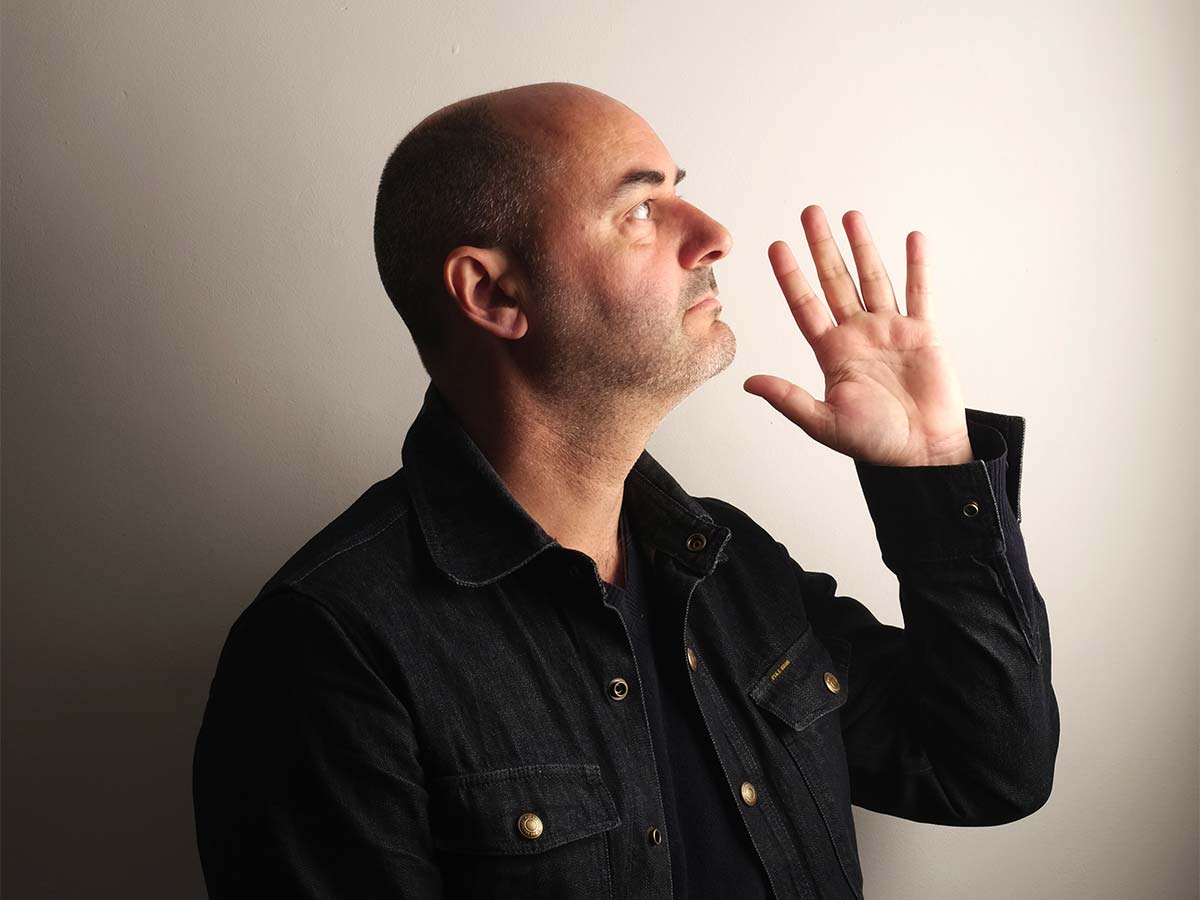
My father (Fioravante) was a visionary, with a passion, a natural leader. I fought with him every day. After I finished my studies I went to work, and I did a bit of everything, as long as it was far away from BertO. Then, in 1998 I had a sort of vision, and said to myself “I’d like to try,” so I went to my father and told him. I enjoyed making sofas and delivering them to customers. He told me, “stay in the office, I don’t need another upholsterer, the world is changing, I need someone who can think.” In 2001 there was a computer in the office, we were in the early days of the Internet, almost, we made our first website and I saw that people visited. We were already using keywords, in the USA search optimization already existed, and in our sector we were among the first in Italy, in 2002, to work with AdWords campaigns. People came, sales happened, it was overwhelming.

Tell us about your relationship with Google.
Google has invested heavily in Italy in recent years, and they realized that we had been active for a long time (our first blog was in 2004, and our first video on YouTube – which was not yet part of Google at the time – was in 2006). They understood that we could be a model for others: a normal company in a normal district, and if we could do it others could too, in substance. BertO also grows thanks to the web… two weeks ago we hired 7 people.

How did the web change for you, with the arrival of the social networks?
It changed a lot. We had to study, to try things, we made lots of mistakes, we were off target. Today we are more mature, we have an in-house team and we manage our social channels. The fact that we have had a blog since 2004 has helped us to understand how to gain friends in a disinterested way. We were one of the few corporate bloggers, we all knew each other and talked to each other… today a blog gets born every 5 minutes. It is a sector where the updating is very fast, what works today might no longer be sufficient tomorrow. Training is fundamental, the marketing is subject to intense, hard work, on a daily basis.

What happened in 2013 in New York?
We began to understand the importance of direct relations, so we opened workshops and brought people in, especially the schools, to get young people interested in the trade. We decided to make a sofa done by hundreds of hands, to finance an upholstery school in Managua – it was a very beautiful product, and a big success. With Prof. Stefano Micelli of Cà Foscari (University of Venice) and a group he coordinated, we decided to go to America: we went to visit clients who were furnishing their loft, we did all the custom furnishings, but we handed over the keys after one year, so we could live there in the meantime. One of us really did live there, with the family. In that year we did thousands of live activities, it was a Live Showroom, a great idea. Together with a group of students from Parsons and IDO, and Luca Nichetto, Lera Moiseeva and Joseph Graceffa, we came up with a challenge: what will the sofa of the future be like? After a few months I returned, and with what is called crowd-crafting today we made the Sofa for Manhattan.

How does BertO’s business function today?
Italy accounts for 80%, foreign for 20%, and the same proportion applies to the relationship between the end user and the designer. We have an excellent relationship with designers and users, we have a very expert technical team, our production is always done with great care, selecting from a wide range of materials.
The project is growing, and the Swiss and Chinese markets have gotten us involved in contract projects. We arrived in China – again, my father’s ‘fault’ – in 1998, when the municipality of Meda had a Department of Foreign Affairs (!!) and organized a fair in Shanghai. It was just me and a red armchair, but it worked, also because I had to make the ends meet. I fell in love with China, but we were too small. Today we are better suited, and we work a lot with China, also thanks to local digital channels.